Versailles
Versailles is an independent suburb southwest of Paris, shaped by the Palace of Versailles, formal gardens and a calm residential rhythm. It suits travellers who value space, greenery and history, especially families and those planning a slower stay. Its main advantage is the balance: you can live in a polished, quieter city with markets, squares and local life, while still making practical trips into Paris for museums, restaurants and the capital’s busier streets.
Attractions in this area
1 place we cover here.
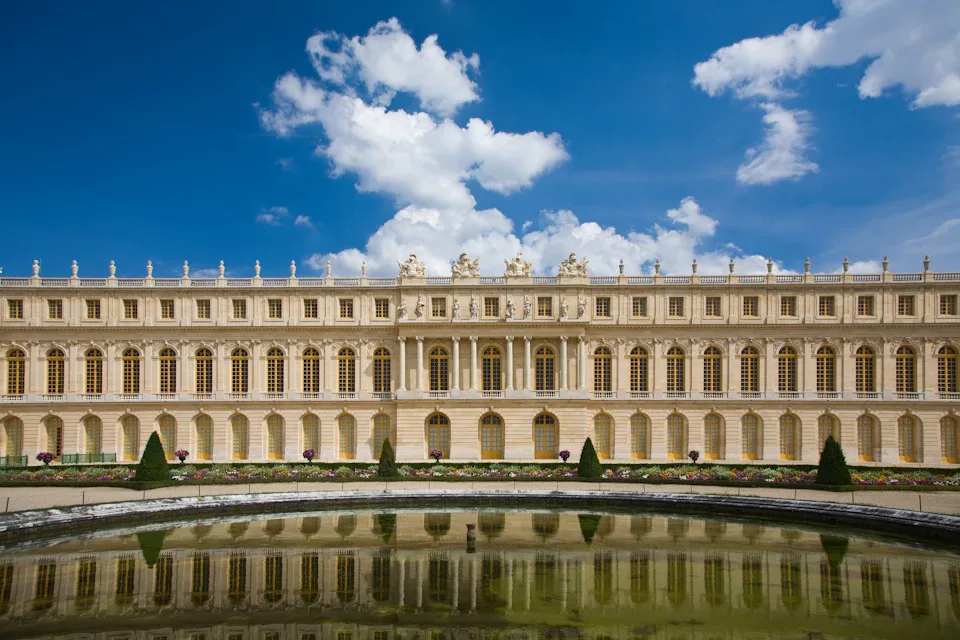
Versailles feels less like an extension of Paris than a separate, more measured city with its own rhythm. There is less traffic, noise and dense urban movement, while daily life centres on residential streets, markets and small town squares.
The architecture reflects the city’s royal past. Central streets are marked by classical façades, formal perspectives and carefully planned avenues, but these monumental settings soon give way to ordinary apartment buildings, quiet lanes and well-kept residential quarters.
The Palace of Versailles and its gardens remain the main visual and historical reference point, yet the city itself does not feel like a museum. Outside the busiest areas, the atmosphere is calm and local, with a noticeable sense of space and greenery.
The pace is well suited to slow walks, unhurried mornings and evenings without a packed schedule. Versailles has a polished, residential feel: quieter and more orderly than central Paris, with history always present but not overwhelming everyday life.
Atmosphere
Versailles feels less like an extension of Paris than a separate, more measured city with its own rhythm. Its central streets are shaped by the royal past, with classical façades, long perspectives and formal symmetry giving way to ordinary apartment buildings, quiet residential lanes and well-kept neighbourhoods.
The Palace of Versailles and its gardens remain the main visual reference, but the town around them feels lived-in rather than staged, with markets, local shops and small squares anchoring everyday life.
In the evening, the pace slows noticeably. Near the palace, you may still meet visitors finishing a day of sightseeing, while elsewhere the streets belong mainly to residents, families, older locals and people returning home.
Conversations, footsteps and the occasional sound of traffic replace the constant bustle of central Paris. After dark, Versailles feels calm and orderly, with a gentle local atmosphere rather than a strong nightlife scene.
How to get there
Paris centre | RER C to Versailles Château Rive Gauche, around 30–40 minutes, €2.55
Montparnasse | Line N train to Versailles Chantiers, around 15–25 minutes, €2.55
Pont de Sèvres | Bus 171 to Versailles, around 40–50 minutes, €2.05
Charles de Gaulle Airport | RER B to Saint-Michel–Notre-Dame, then RER C to Versailles Château Rive Gauche, around 75–100 minutes, €14
Orly Airport | Metro line 14 or Orlyval and RER connections via central Paris, around 60–90 minutes, €14; a taxi usually takes about 35–60 minutes, depending on traffic
Getting around
Versailles is easy to explore on foot, especially around the Palace of Versailles, the central streets and the main squares. Distances can feel longer than they look because the palace grounds are extensive, so comfortable shoes matter.
There is no Paris Metro network in Versailles; local buses are useful for longer trips, but they are less convenient for spontaneous sightseeing.
Taxis and taxi apps are practical for reaching the palace, the railway stations or a hotel with luggage, though availability can be more limited than in Paris, particularly late in the evening.
For trips into Paris, local trains are generally more useful than taxis, while a car is rarely an advantage inside Versailles because of traffic, parking and busy periods around the palace.
Best time to visit
The best time to visit Versailles is on a weekday morning, when the palace and gardens are generally calmer and the light is pleasant for walking. Spring and early autumn offer comfortable temperatures and greenery, while summer can feel tiring during long outdoor visits, especially around midday.
If possible, avoid weekends, public holidays and peak afternoon hours, when visitor numbers rise and the central areas become noticeably busier.
Top attractions in this area
Palace of Versailles | The former royal residence and the area’s essential landmark, known for its grand state rooms, royal apartments and Hall of Mirrors. Gardens of Versailles | Vast formal gardens with fountains, sculptures and long perspectives, ideal for extended walks beyond the palace interiors.
Grand Trianon | An elegant marble palace set within the estate, offering a quieter and more intimate view of royal life. Petit Trianon | A smaller neoclassical retreat associated with Marie Antoinette, surrounded by landscaped gardens and the Queen’s Hamlet.
Royal Tennis Court | A historic site linked to the French Revolution, where the Tennis Court Oath was made in 1789.
Where to stay
Accommodation in Versailles ranges from practical budget hotels and dependable mid-range properties to more polished premium stays, with both large international or French chains and smaller boutique hotels represented.
The city is generally calmer and more spacious than central Paris, so even standard rooms can feel less compressed, while higher-end options tend to focus on elegant interiors, historical character and proximity to the palace area.
When choosing where to stay, prioritise convenient access to the palace and gardens, the main railway connections to Paris, and the evening atmosphere around the property.
A boutique hotel suits travellers who want local character and a quieter setting; a large chain is often the safer choice for predictable facilities, family stays and easy logistics.
Rates can rise during major exhibitions, weekends and periods of high visitor demand, so location and transport links matter as much as the room category.
Dining
Versailles’ dining scene is calmer and more local than central Paris, with cafés, bakeries, market stalls and casual restaurants concentrated around the centre and the areas near the palace.
The most common formats are traditional French brasseries, crêperies, wine bars and small family-run places, with simple lunches often built around a set menu, seasonal dishes or market produce. A casual meal usually falls into the moderate price range, while takeaway counters and bakery food offer a cheaper option.
Many places are busiest at lunchtime and in the early evening, with some closing between services or keeping shorter hours on Sundays and Mondays.
Fine dining is present but limited compared with Paris, and is more likely to be part of a special evening than an everyday choice. Expect a quieter, reservation-friendly atmosphere, formal service and a significantly higher bill, especially for tasting menus.
The area around the palace can be convenient before or after a visit, but it is also more tourist-oriented and may feel less spontaneous during peak hours. For a broader choice and a more relaxed local meal, look beyond the immediate palace surroundings into the residential centre.
Shopping
Shopping in Versailles is centred on local streets rather than large shopping centres. The area around the Notre-Dame Market and Rue de la Paroisse has everyday shops, food stores, cafés, independent boutiques and a lively market atmosphere.
It is a good place to pick up regional produce, bakery items, flowers and small gifts without leaving the historic centre.
Near the Palace of Versailles, many shops focus on visitors, with postcards, history-themed souvenirs, decorative objects and French gifts. The selection is convenient but more tourist-oriented than in Paris, while the market and independent shops are better for experiencing the city’s everyday rhythm.
Practical tips
Clothing | Wear comfortable shoes and bring layers: the palace visit involves long walks, while the gardens are exposed to sun, wind and rain
Queues | Expect crowds at the Palace of Versailles, especially in peak season; arrive early and allow extra time for security and entry
Money | Cards are widely useful, but keeping a small amount of cash is practical for markets and smaller purchases
Common mistake | Do not plan Versailles as a quick stop: the palace, gardens and surrounding town need much of a day to explore comfortably | Getting around | Check your return route to Paris in advance, especially after an evening visit, as Versailles is outside the capital and transport takes longer than a trip within central Paris
Safety
Versailles is generally considered a safe and orderly place for visitors, including during the day. The main risks are the usual ones in busy tourist areas: pickpocketing, phone or bag theft, and occasional scams around the palace, train stations and crowded transport. Keep valuables secure and stay aware in queues and dense groups.
At night, the central areas and residential streets are usually calm, but they can become very quiet once the main visitor flow has gone. Take normal precautions when returning from Paris, especially near transport hubs and on less busy streets, and avoid leaving bags or phones unattended.
Photo spots
Palace of Versailles façade and Place d’Armes | Early morning | Capture the palace’s symmetry, formal entrance and broad forecourt before the crowds arrive
Latona Fountain and the main garden axis | Late morning or golden hour | Frame the fountains, clipped hedges and long perspective towards the Grand Canal
Grand Canal | Late afternoon | Photograph the straight waterway, garden avenues and distant palace views reflected in the water
Petit Trianon and the Queen’s Hamlet | Morning or late afternoon | Look for quieter scenes with rustic buildings, gardens and smaller-scale royal architecture
Avenue de Paris | Blue hour | Capture the palace at the end of the grand avenue, with the changing sky above the city’s formal axis
Nearby neighborhoods
From Versailles, it is easy to continue through the Saint-Louis and Notre-Dame quarters, where historic streets, markets and elegant squares offer a natural extension of the central walk. For a quieter change of pace, head towards Montreuil or Porchefontaine, both largely residential and greener.
Beyond the city, Le Chesnay-Rocquencourt, Viroflay and Saint-Cyr-l’École make practical short trips by local transport.
Area pros
The Palace of Versailles and its gardens offer an exceptional historical experience
Quiet, green surroundings provide more space and a slower pace than central Paris
A well-kept standalone city with residential streets, markets and small squares
A convenient base for combining Versailles with day trips into Paris
Area cons
Farther from central Paris, so daily sightseeing requires extra travel time
Less nightlife and fewer late-evening options than in Paris
The area around the Palace can feel crowded during busy tourist periods
Less convenient for first-time visitors planning a packed itinerary across central Paris