Who will love it
Grande Galerie de l'Évolution
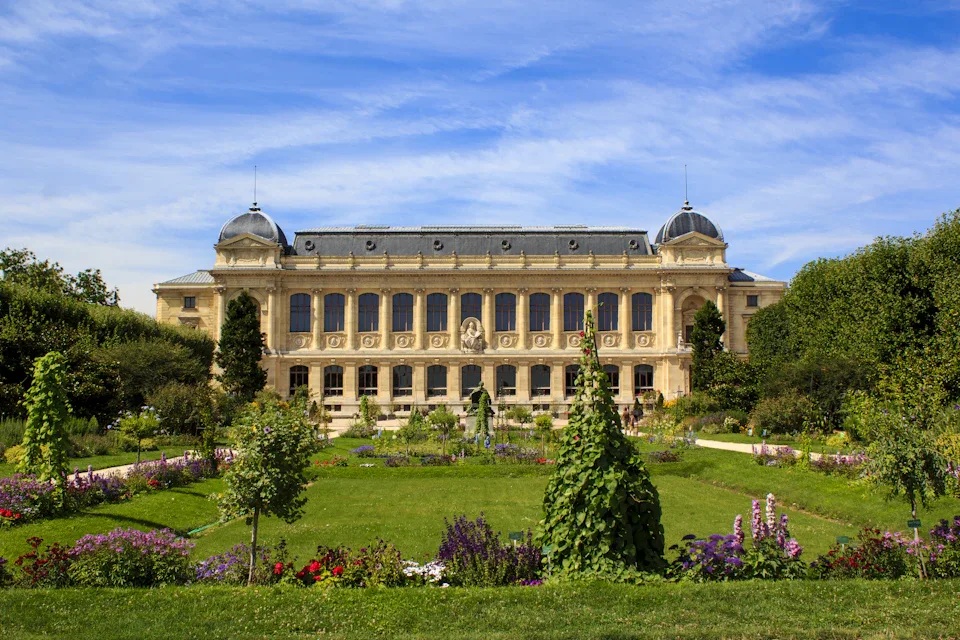
VerdictGrande Galerie de l'Évolution

Grande Galerie de l'Évolution
Early morning on weekdays
The standard ticket grants access to the permanent collection, which includes the spectacular central hall and the 'Caravan' of taxidermy. For most travelers, this is the only ticket needed to experience the museum's architectural and visual highlights.
If a high-profile temporary exhibition is running, you will need a combined ticket, as these are housed in a separate area and are not included in the base fare.
Pro Tip: A common mistake is not booking in advance. Even though tickets are sold on-site, time slots frequently sell out during school holidays, and priority is always given to those with pre-booked digital tickets.
To experience the hall at its most atmospheric, arrive right at opening or during the final 90 minutes of the day. Weekdays are significantly quieter than weekends, though you should expect school groups on Wednesday afternoons.
The dramatic, low-level lighting is a signature feature of the gallery, but it makes reading small scientific labels difficult when the galleries are crowded.
Because the historic iron-and-glass building lacks modern air conditioning, the upper levels can become uncomfortably warm. If you are visiting during a heatwave, schedule your visit for the morning to stay cool. Photographers should aim for the late afternoon when the light through the glass roof creates the most striking shadows across the animal parade.
Entry is free for all European Union residents under the age of 26, as well as for all visitors under 18 regardless of nationality. This makes the gallery one of the most cost-effective major attractions in Paris for families with older children.
The museum is also a featured site on the Paris Museum Pass, which is the best way to bundle your visit with the nearby Panthéon or the Cluny Museum.
While there isn't a single 'Jardin des Plantes' pass, you can receive a reduced entry rate at the neighboring Ménagerie (zoo) or the Galerie de Paléontologie et d’Anatomie Comparée by presenting a full-price ticket from the Grande Galerie purchased within the previous few days.
This is a practical way to see the entire scientific complex at a lower total cost.
A guided tour is generally not necessary for the average visitor. The museum is designed as a visual journey, and the impact of the 'parade' of animals is best felt at your own pace. The layout is intuitive, moving from marine life at the bottom to the history of human impact at the top.
Guided tours are only recommended for those with a specific academic interest in taxonomy or for families who want a structured storytelling experience to keep children engaged. If you prefer a self-guided experience, the 90-minute walk-through provides ample time to see everything without feeling rushed.
13
yes
Morning at opening or late afternoon on weekdays
10:00 – 18:00 (Closed on Tuesdays)
Gare d'Austerlitz (Lines 5, 10) or Place Monge (Line 7)
90 minutes
EUR
The Grande Galerie is a visual spectacle where the architecture is as much a draw as the collection. It appeals most to those who value atmosphere and a 'cabinet of curiosities' aesthetic over high-tech interactive displays.
However, the dramatic low lighting that makes the animal 'caravan' so photogenic also makes the scientific descriptions difficult to read, which may frustrate visitors looking for a deep academic dive.
Be aware that the historic iron-and-glass structure lacks air conditioning, making the upper balconies uncomfortably warm during sunny afternoons. To avoid the heat and the heaviest crowds, prioritize an early morning visit.
Expert Insight: Keep your physical ticket stub; it grants a reduced entry rate at the neighboring Paleontology gallery or the Ménagerie zoo if used within three days.
A standard ticket is the most practical choice for most visitors, granting full access to the four main levels of the permanent collection and the iconic animal parade. If there is a high-profile temporary exhibition or a virtual reality experience active, you will need a combined ticket.
The permanent collection alone is vast enough to fill a standard visit, so only upgrade if a specific temporary theme catches your interest.
A frequent mistake for first-time visitors is arriving without a pre-booked time slot. While the gallery is located within the open-access Jardin des Plantes, entry to the building itself is strictly regulated by capacity, and walk-in availability is often limited.
To experience the cinematic atmosphere without the noise of large crowds, aim for a weekday morning right at the 10:00 AM opening. This is also the best time for photographers, as natural light through the iron-and-glass roof is at its most striking.
If you are visiting with a family, the late afternoon can be calmer, but be mindful of the closing procedures which begin shortly before 6:00 PM.
During the summer, the upper balconies can become quite warm as the historic building lacks modern air conditioning. If you are sensitive to heat, prioritize an early morning visit and start your tour on the top floors, moving down to the cooler ground levels as the day warms up.
The Grande Galerie de l'Évolution is part of the Muséum National d'Histoire Naturelle complex. You can often find value by purchasing combined tickets that include the nearby Ménagerie (the historic zoo) or the Galerie de Paléontologie et d’Anatomie Comparée, both located within a short walk inside the Jardin des Plantes.
Visitors under 26 who are residents of the European Union enjoy free entry, though booking a free time-slot online is still mandatory to guarantee access. The gallery is also included in the Paris Museum Pass, making it an excellent addition to a multi-day sightseeing itinerary.
A self-guided visit is usually sufficient for those who want to focus on the visual spectacle and the sheer scale of the taxidermy. The layout is intuitive, and the experience is designed to be immersive. However, because the gallery uses dramatic, dim lighting to preserve the specimens, reading the detailed scientific labels can be difficult for some.
A guided tour is a significant asset for families with children or science enthusiasts who want to understand the specific evolutionary links between the species on display. If you prefer to explore independently but want more depth than the labels provide, the audio guide is a reliable middle ground that works well in the low-light environment.
Crowds peak during weekends and school holidays, making elevators and dim display areas busier.
Mini-calculator based on crowd levels by day and time.
This day is usually calmer than average. This slot has a higher chance of a comfortable visit: compromise between light and visitor flow.
The Grande Galerie de l'Évolution is located within the Jardin des Plantes complex. The most direct way to enter is through the dedicated museum entrance at 36 Rue Geoffroy-Saint-Hilaire rather than walking through the main garden gates on the river side. This entrance brings you immediately to the ticket scanning area and security check.
Once inside, the transition from bright daylight to the museum's signature dim, atmospheric lighting can be disorienting. Take a moment in the lobby to let your eyes adjust before approaching the central animal caravan.
Because the building uses a historic open-floor plan with a glass roof, the upper balconies can become significantly warmer than the ground floor.
The gallery is housed in a magnificent 19th-century iron-and-glass structure that lacks modern air conditioning. On warm days, the temperature rises significantly as you ascend to the upper balconies, so dress in light layers.
The lighting is intentionally cinematic and dim to protect the taxidermy specimens; allow a few minutes for your eyes to adjust upon entry, as reading the small scientific labels can be difficult in the shadows during busy periods.
Security is strict, and a mandatory bag check is performed at the entrance on Rue Geoffroy-Saint-Hilaire. Because a specific time slot is required for entry, aim to arrive at the museum doors at least 10 minutes before your scheduled time.
While the museum is fully accessible via elevators, these can be small and may involve a wait during peak family visiting hours.
Free self-service lockers are available near the entrance for coats and small personal items. These lockers cannot accommodate large travel bags or suitcases; any item exceeding 55x35x20 cm will be denied entry by security.
Strollers are permitted inside the gallery and can navigate all levels via the elevators, though you may find it easier to leave them in the designated cloakroom area if the museum is crowded.
Begin your morning at the Panthéon to admire the architecture before walking down to the Jardin des Plantes. Spend the midday exploring the Grande Galerie de l'Évolution and the nearby botanical greenhouses.
For lunch, enjoy the garden terrace at Les Belles Plantes or head to the Mosquée de Paris for traditional couscous. Finish your afternoon with a walk along the Seine toward the Institut du Monde Arabe to catch the view of the city as the light fades.
Originally opened in 1889 as the Gallery of Zoology, this landmark was designed to showcase the vast natural history collections of France within a monumental iron-and-glass structure.
For decades, it served as a traditional repository for specimens, reflecting the 19th-century obsession with categorizing the natural world. However, the building eventually fell into neglect and remained closed to the public for nearly thirty years starting in the mid-1960s.
The gallery was dramatically reinvented and reopened in 1994, shifting its focus from a simple display of animals to a narrative about the mechanics of evolution. This transformation turned a static museum into an immersive environment where synchronized lighting mimics the rhythms of the natural world.
Today, it stands as a centerpiece of the Jardin des Plantes, using its famous caravan of taxidermy to illustrate the interconnectedness of life and the urgent reality of endangered species.
Grande Galerie de l'Évolution
Fully accessible with elevators to all levels.
Highly recommended; strollers permitted throughout and free entry for minors.
The Grande Galerie de l'Évolution is fully accessible to wheelchair users and visitors with reduced mobility. Large elevators provide access to all four levels of the exhibition, from the ground-floor marine life to the upper balconies. The main pathways are wide and level, allowing for easy navigation between the central displays and the side galleries.
Strollers are welcome inside the museum. The spacious layout and elevator access make it one of the most convenient attractions in Paris for parents with young children. A free cloakroom is available at the entrance for storing bulky items or coats.
Entry is free for all visitors under 18 years old. Children under 13 must be accompanied by an adult at all times. Note that the gallery uses low-level atmospheric lighting to protect the specimens, so visitors with visual impairments should move with care. Benches are provided on every floor for rest stops during the visit.
Restrooms are located on the ground floor (Level 0) and the basement level (Level -1). These facilities are free for ticket holders and include dedicated baby-changing stations on the ground floor. The museum is fully accessible via elevators, though the historic nature of the building means some corridors are narrow.
A casual cafeteria is situated on the first floor (Level 1), offering a direct view of the central animal procession. It serves light snacks, sandwiches, and hot beverages. For a more substantial meal, the Les Belles Plantes restaurant is a short walk away within the Jardin des Plantes grounds.
The museum boutique is located near the exit on the ground floor. It features an extensive collection of nature-themed items, including high-quality animal plushies, mineral specimens, and a wide selection of scientific books and educational kits for children.
Free Wi-Fi is available throughout the gallery under the museum's public network. Drinking water fountains are positioned near the restroom areas. While you may carry a personal water bottle, eating and drinking are strictly limited to the designated cafeteria zone to protect the specimens.