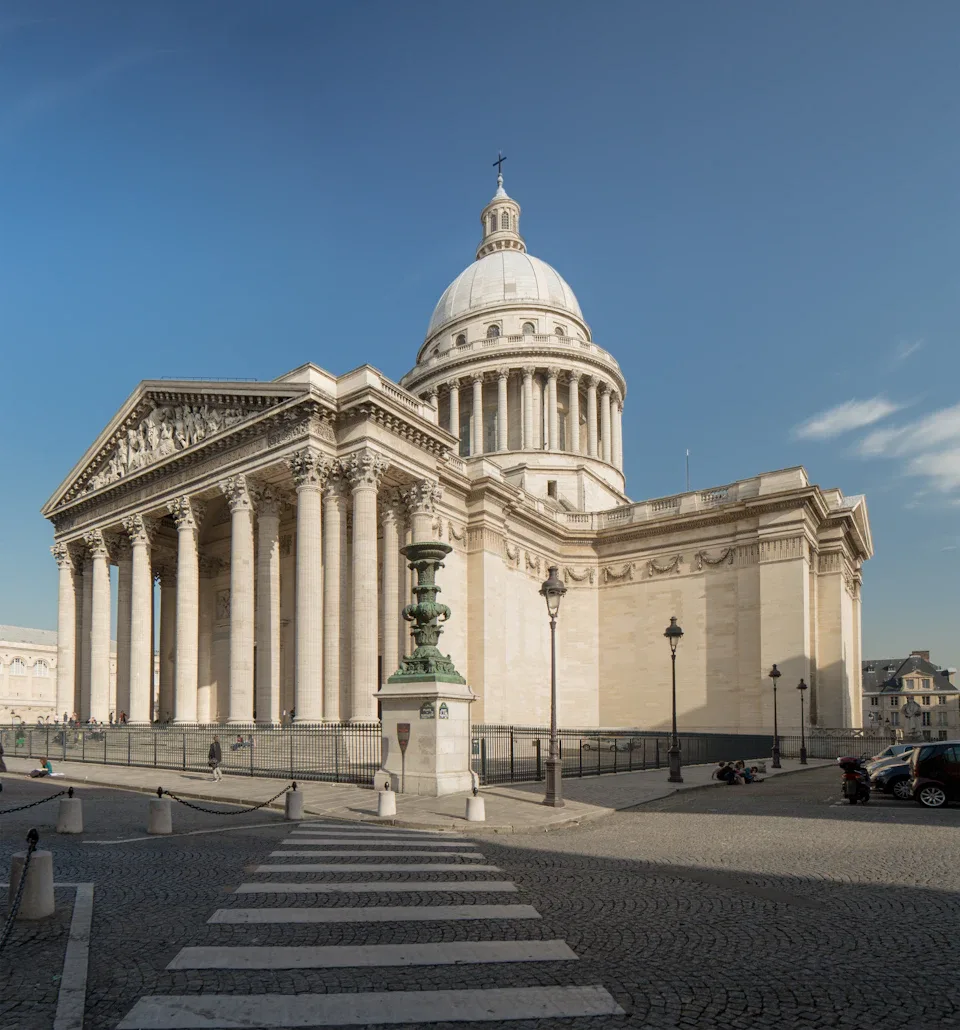
Which ticket to choose
For most visitors, the standard Panthéon entry ticket is enough. It covers the essential experience: the nave, the crypt, the Foucault pendulum, temporary displays inside the monument, and the graves of figures such as Voltaire, Rousseau, Victor Hugo, Émile Zola, Jean Jaurès, Alexandre Dumas, Joséphine Baker, and Marie Curie.
Paying more makes sense only if you want interpretation, not access. The main upgrades worth considering are the €4 audioguide or the guided conference visit; “VIP” or heavily marked-up skip-the-line tickets add little here, because queues are normally manageable and the visit is not a complex timed-entry attraction.
- Standard ticket: best for a calm self-guided visit in 1–1.5 hours.
- Audioguide: best if you want structure without joining a group.
- Guided visit: best for French history, architecture, and symbolism.
- Paris Museum Pass: good value if you are visiting several covered monuments and museums.
ImportantThe common first-time mistake is buying an expensive reseller ticket because it sounds like a special access product. For the Panthéon, the difference is usually convenience or commentary, not a dramatically better entrance.
Best time to go
Go on a weekday morning if you want the quietest visit. The building suits slow looking: the neoclassical interior, crypt, inscriptions, and pendulum are easier to appreciate before tour groups and Latin Quarter foot traffic build up.
Late afternoon gives softer light around Place du Panthéon and the exterior columns, but the interior can feel less peaceful and you have less margin before last admission. The panoramic colonnade is closed to visitors, so do not plan your ticket around a guaranteed rooftop view.
For solo visitors, morning is the most rewarding. Families should avoid the last hour and allow time for the crypt without rushing. Photographers get the best exterior shots from Place du Panthéon and Rue Soufflot, especially when the square is less crowded.
Combos and discounts
The most relevant real combo is the Panthéon + Basilica Cathedral of Saint-Denis joint ticket. It works best for travelers interested in French monarchy, national memory, and burial sites; it is less useful if you are staying only around central Paris, because Saint-Denis requires a separate trip north of the city.
The Paris Museum Pass includes Panthéon admission and is the cleanest saving if your itinerary also includes places such as the Louvre, Musée d’Orsay, Sainte-Chapelle, Arc de Triomphe, or Conciergerie.
Free admission applies to under-16s with an accompanying adult e-ticket, disabled visitors with an accompanying adult, and EU nationals or qualifying French residents aged 16–25 after the required checkout step.
TipIf you hold a valid Navigo Culture benefit, Carte Cezam, eligible recent SNCF ticket, or Eurostar 2-for-1 offer, the Panthéon has dedicated partner rates. These are useful for residents and rail travelers, but not worth reorganising a Paris itinerary around.
When a tour is worth it
A guided tour adds real value if you want to understand why the building moved from church to republican mausoleum, how Soufflot’s architecture works, and why certain figures were admitted to the crypt. It also helps connect the Panthéon to the wider story of the French Revolution, the Republic, secular memory, and the Latin Quarter.
Skip the tour if you mainly want to see the crypt, the pendulum, and the architecture at your own pace. The Panthéon is compact and legible enough for an independent visit, especially with an audioguide, and many travelers will feel satisfied after 60–90 minutes.