Eiffel Tower

Why visit

Who will love it

Prioritize the Eiffel Tower if this is your first trip to Paris, if you want one big panoramic view that helps you read the city at a glance, or if the experience of going up the tower itself matters to you as much as the view.

It is the clearest “start here” landmark in Paris, and for most travelers the best balance is the second floor rather than the summit: the views are excellent, the visit is simpler, and the ticket cost stays more reasonable.

Practical pick: book an early-morning or evening slot, and choose the second floor unless the summit is specifically part of the dream.

Who should skip it

You can lower it on your list if you already know Paris well, dislike fixed-time attractions, or mainly want the best photo of the tower rather than the experience of being on it.

The summit costs more, feels colder and windier, and is not automatically the best-value option; if you are deciding carefully, treat the second floor as the default choice and the summit as an extra, not a must.

What to know beforehand

The Eiffel Tower works best for first-time visitors to Paris, anyone short on time, and travelers who want one unmistakable landmark rather than a long museum-style visit.

In practice, the second floor is the smarter choice for most people: the view is broad enough to read the city properly, the experience is shorter, and the extra cost and waiting time for the summit do not always translate into a better visit.

Travelers who love iconic viewpoints, evening city lights, and a clear sense of Parisian geography usually come away satisfied; those expecting a long, varied attraction rather than a short, structured ascent may find it thinner than the price suggests.

Good to knowThe real variable here is not the view but the queue. A timed lift ticket changes the experience completely, while a last-minute visit can turn into a long stretch of standing in security and elevator lines. If you dislike wind, heights, or crowded lift systems, the summit is the weak point of the visit; if you want the classic Eiffel Tower moment with the least friction, aim for the second floor and treat the tower itself, not just the top, as the main event.
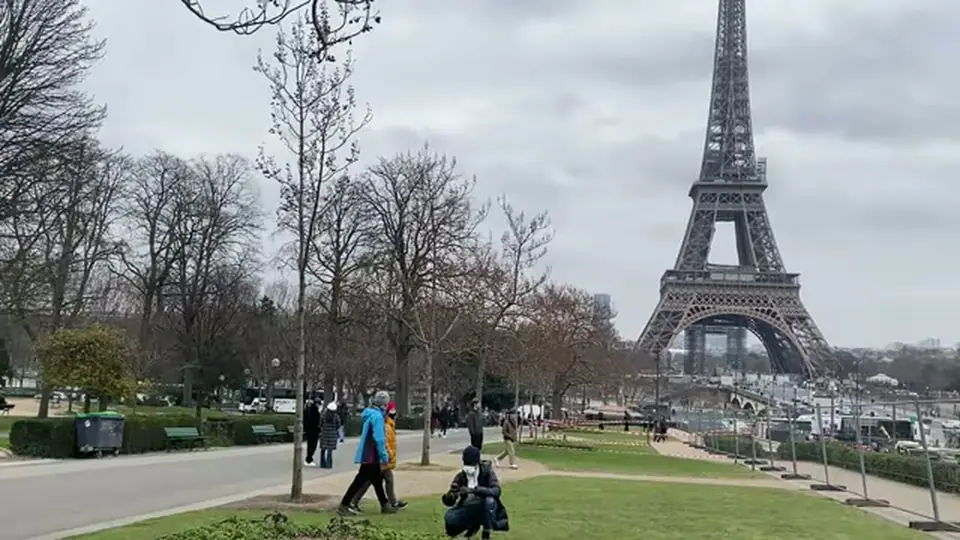
Visitors in a park with the Eiffel Tower rising in the background

🎫 Tickets, tours & discounts

Which ticket to choose

For most first-time visitors, the best balance is the 2nd-floor ticket. The view is high enough to read Paris clearly — the Seine, Montmartre, Invalides, Montparnasse and the historic center — and it avoids the extra wait, wind and cost of the summit.

Pay more for the summit if standing at the very top is part of the dream, not because the view is automatically better. The cheapest adult option is the stairs to the 2nd floor at €14.80; the full lift route to the summit is €36.70, while stairs to the 2nd floor plus lift to the summit is €28.00.

  • Best value: stairs to the 2nd floor if you are fit and do not mind 674 steps.
  • Easiest visit: lift to the 2nd floor, especially with children or limited energy.
  • Full experience: summit ticket, ideally when visibility is clear.
  • Premium-style option: guided or hosted access if timed tickets are gone or you want commentary, but it does not remove security screening.
ImportantThe common first-time mistake is buying the summit automatically. The 2nd floor often gives the more satisfying photographs because Paris landmarks are closer and easier to identify.

Best time to go

Early morning is the calmest choice for comfort: fewer people on the platforms, shorter movement through security, and better conditions for families. Evening is more atmospheric, especially around sunset and after dark, but it is also the most in-demand period.

For photos, the best compromise is late afternoon into blue hour: you get daylight views, sunset tones and the illuminated tower experience in one visit.

For a low-stress visit, choose the first available morning slot; for couples and photographers, choose evening; for families, avoid the busiest sunset window and keep the visit closer to 1.5–2 hours rather than stretching it to the full 3.

TipArrive with time for security before your slot. The entrance is at Champ de Mars, 5 Avenue Anatole France, with Bir-Hakeim and Trocadero the most useful metro stops.

Combos and discounts

The official Eiffel Tower ticket is best when you only want the tower. Real combo offers are mostly sold by major ticket platforms and tour operators, commonly pairing the Eiffel Tower with a Seine River cruise, the Louvre, Arc de Triomphe, or a Paris city tour.

These can be convenient if you want one booking for a packed day, but they are not always cheaper than buying separate tickets.

The Paris Museum Pass does not include the Eiffel Tower. Some Paris sightseeing passes include an Eiffel Tower guided climb or 2nd-floor guided experience, not standard open admission and not the summit by default. Children under 4 enter free with a free ticket, while reduced rates apply for ages 4–11, ages 12–24, and eligible disabled visitors with proof.

ImportantThere is no reliable off-peak Eiffel Tower discount by time of day. The real saving is choosing stairs or the 2nd floor instead of paying for summit access you may not need.

When a tour makes sense

A guided tour is worth it if you want context: how the tower was built, why it survived after the exposition, what you are seeing from each side, and how Paris is laid out from above. It also helps if you dislike navigating timed entry, meeting points and platform changes on your own.

Skip the tour if your main goal is the view and you are comfortable moving independently. A self-visit with a 2nd-floor ticket is enough for most travelers, especially if you already know the basic Paris landmarks and prefer to spend the extra money on a Seine cruise or another viewpoint such as Arc de Triomphe.

Weather now
Paris, France
NowMostly clear 🌤️
Temperature15°C
VisibilityExcellent
AerosolsClean air · AOD 0.17

Good conditions for visiting today.

AOD — how much dust and haze in the air dim the distant view. 0 clean, >0.4 noticeable, >0.7 heavy.

Crowd indicator

Mini-calculator based on crowd levels by day and time.

When to go?

Mini-calculator based on crowd levels by day and time.

Best time at Mon — 10:00

This day has average visitor density. This slot has a higher chance of a comfortable visit: fewer people and calmer pace.

30–50% · Quiet60–80% · Moderate90–100% · Crowded

Nearest days

Today
10:0064%
12:0078%
14:0084%
16:0086%
17:0090%
18:0092%
Tomorrow
10:0072%
12:0086%
14:0092%
16:0094%
17:0096%
18:0098%
Day after tomorrow
10:0068%
12:0082%
14:0088%
16:0088%
17:0092%
18:0094%

How to get there

Nearest stationBir-Hakeim / Trocadéro
AddressChamp de Mars, 5 Avenue Anatole France, 75007 Paris

How to find the entrance

1
Start at Champ de MarsGo to 5 Avenue Anatole France, on the Champ de Mars side of the tower in the 7th arrondissement.
2
Choose your stationBir-Hakeim is the most direct metro stop; Trocadéro works well if you want the classic approach first.
3
Pick your entranceUse the South Pillar for the lift and the East Pillar for stairs.
4
Join the lineQueues are often shorter at the East and West Pillars; the calmest access is early morning or after 17:00.

Go to the Eiffel Tower access area at Champ de Mars, 5 Avenue Anatole France, 75007 Paris. The nearest metro stops are Bir-Hakeim and Trocadéro. The part that confuses most first-time visitors is that you do not use the same entrance for every ticket: lift visitors head to the South Pillar, while stairs access starts at the East Pillar.

Build in extra time before you reach the tower itself. The main delay is the security screening area around the base, and after that there can be a second wait at your pillar depending on whether you are taking the lift or the stairs. Even with a timed booking, this is not a straight walk-in experience.

The simplest way to avoid mistakes is to know your access type before you arrive and go directly to the correct pillar.

If you are choosing between levels, the 2nd floor is the best-value option for most visitors: the views are excellent, the visit is simpler, and you avoid paying extra for a summit ticket that can involve more waiting and a colder, windier top level.

  • Lift access: South Pillar
  • Stairs access: East Pillar
  • Allow 1.5 to 3 hours in total
  • The quietest arrival windows are around 8:30 and after 17:00

Practical limits & what to bring

What to consider before your visit

The Eiffel Tower is not a quick “walk in and go up” stop. First you enter the fenced esplanade through security, then you find the correct pillar for your ticket type: lift, stairs, ticket office, or summit connection. Add 15–20 minutes before your ticket time for screening, and more at peak times.

Expect standing, queues, open-air exposure, and wind, especially above the second floor. The summit is colder and tighter than the second floor, while the second floor gives the better balance of view, time, and comfort for most first-time visitors.

There is no formal dress code, but shoes are required and clothing or behavior that disrupts the visit can lead to refusal of entry. Children under 12 must be accompanied by an independent adult. Wheelchairs are allowed on the first and second floors, but the summit is not accessible to wheelchair users or visitors with reduced mobility.

ImportantIf you have a stroller, bring a folding one. Non-folding strollers are not accepted, and moving through security, lift queues, and crowded platforms is much easier with the lightest setup possible.

What you can and cannot bring

  • Forbidden: weapons, ammunition, knives, blades, and items that can be treated as weapons.
  • Forbidden: tools such as cutters, screwdrivers, and pliers.
  • Forbidden: explosives, flammable substances, and unstable materials.
  • Forbidden: glass bottles, drinking glasses, and drink cans.
  • Forbidden: excessive quantities of food or drink.
  • Forbidden: large suitcases, oversized parcels, very bulky bags, and heavy items that do not pass the entrance size check.
  • Forbidden: non-folding strollers.
  • Forbidden: scooters, bicycles, skateboards, rollerblades, overboards, and other large rolling objects, except foldable strollers and mobility or assistance devices.
  • Forbidden: animals, except assistance animals.
  • Forbidden: climbing, jumping, bungee, or parachuting equipment.
  • Forbidden: group picnics, eating or drinking outside designated areas, and throwing anything from the tower.
  • Forbidden: professional filming, photography, or audio recording without written permission.
  • Allowed: a small backpack or day bag that can pass security screening.
  • Allowed: a personal phone or camera for normal visitor photos.
  • Allowed: a reusable water bottle if it is not glass and not a drink can.
  • Allowed: a small snack or modest amount of food, but not a picnic setup.
  • Allowed: folding strollers.

Storage and belongings

There are no lockers, cloakrooms, or left-luggage facilities at the Eiffel Tower, either free or paid. If an item is refused at security, staff will not store it for you, and anything discarded cannot be recovered.

Travel light: a small day bag is the safest choice, and suitcases should be left at your hotel, apartment, or a luggage-storage service before you arrive.

A baggage sizer is used before entry to the monument, but the practical rule is simple: do not bring rolling luggage, large backpacks, or bulky shopping bags. Folding strollers can enter, and there is stroller parking on the esplanade near the South Pillar; non-folding strollers must stay away from the visit route.

💡 Useful tips

  • For a classic, highly sought-after photo of the tower framed by traditional Haussmann buildings, head to the dead-end where Rue de l'Université meets Avenue de la Bourdonnais.
  • If the main Trocadéro plaza is too crowded, walk five minutes to Avenue de Camoëns for a quiet, elevated balcony view.
  • Skip the long lines for the second-floor restrooms and use the consistently empty facilities on the first floor instead.
  • While on the ground level, look closely inside the East and West pillars to see the massive yellow and red hydraulic wheels of the original 1899 elevator mechanisms still in operation.
  • The vintage carousel near the base at Pont d'Iéna provides a perfect, whimsical foreground for evening photos when both it and the tower are illuminated.
  • Standing directly underneath the exact center of the tower and looking straight up into the iron lattice reveals a mesmerizing geometric perspective that most visitors rush right past.
  • Bring your own small binoculars or a strong camera zoom, as the coin-operated telescopes on the observation decks are frequently occupied or out of order.

Location and what's nearby

What kind of neighborhood

  • The Eiffel Tower sits in the polished western 7th arrondissement, where grand avenues meet lawns, embassies, museums, and quiet residential streets.
  • The immediate mood changes fast: open, crowded photo zones by the tower, calmer streets around Rue Saint-Dominique and Rue Cler.
  • It fits a first-Paris day well: river views, major monuments, classic bistros, and easy add-ons without crossing the whole city.
  • The area is not a nightlife district; it works better for daytime sightseeing, sunset viewpoints, and a planned dinner.

Nearby on foot (up to 15 minutes)

  • Champ de Mars — broad lawns for classic tower photos and a pause · 2 min
  • Pont d'Iéna — direct Seine crossing with strong tower angles · 4 min
  • Seine riverbanks — easy waterfront walk toward Alma or Bir-Hakeim · 5 min
  • Musée du quai Branly - Jacques Chirac — major non-European art museum in a garden setting · 8 min
  • Trocadéro Gardens — the most famous frontal Eiffel Tower viewpoint · 12 min
  • Rue Cler — market street for cheese, cafés, and picnic supplies · 14 min
  • École Militaire — monumental 18th-century military school facing Champ de Mars · 14 min

15–30 minutes by transport

  • Les Invalides — Napoleon’s tomb and military history after the tower · 10 min by taxi
  • Arc de Triomphe — another Paris icon with a strong skyline pairing · 15 min by taxi
  • Musée d'Orsay — Impressionist masterpieces in a former railway station · 18 min by taxi
  • Saint-Germain-des-Prés — cafés, galleries, and a softer Left Bank finish · 20 min by taxi
  • Louvre Museum — the obvious full-day extension for first-time visitors · 20 min by taxi

Where to eat nearby

  • Girafe — seafood and terrace views by Trocadéro · expensive · reservation essential · 15 min walk
  • Au Bon Accueil — seasonal French cooking near Quai Branly · above average · advisable to reserve · 9 min walk
  • La Fontaine de Mars — classic Paris bistro near Rue Saint-Dominique · above average · advisable to reserve · 14 min walk
  • Le Petit Cler — casual market-street French comfort food · moderate · possible without reservation · 15 min walk
  • Café de l'Alma — polished brasserie for a straightforward meal · above average · advisable to reserve · 12 min walk

Ready-made day route

Start at Trocadéro Gardens for the cleanest full-tower view, cross Pont d'Iéna, then visit the Eiffel Tower before slowing down on Champ de Mars. Continue to Musée du quai Branly - Jacques Chirac or Rue Cler depending on whether you want culture or a lighter neighborhood wander.

Finish with dinner at Au Bon Accueil for a quieter Left Bank meal close to the river.

NoteDo Trocadéro before standing under the tower; the perspective is better before the crowds and security barriers compress the experience.
Reference

Facts

Read more

Numbers and Scale

  • Height: 330 m to the antenna tip, making it the tallest structure in Paris.
  • Original height: 312 m at completion, before successive antennas turned it into a broadcasting mast.
  • Footprint: 125 m across at ground level, so the tower needs a full Champ de Mars-scale setting to read properly.
  • Iron frame: 7,300 metric tons, with a total structure weight of 10,100 metric tons including fittings.
  • Assembly: 18,038 iron parts and 2,500,000 rivets, a reminder that the monument is a giant prefabricated kit.
  • Build time: 2 years, 2 months and 5 days, exceptionally fast for a 300 m iron structure.
  • Construction cost: 7,799,401.31 French gold francs, largely financed through Eiffel’s operating concession.

Myths and Misconceptions

  • Myth: Gustave Eiffel personally designed the whole tower. In fact: Koechlin and Nouguier drew the first concept; Sauvestre refined its look.
  • Myth: The tower was meant to stand forever. In fact: It had a 20-year concession and survived because radio made it useful.
  • Myth: It has always been 330 m tall. In fact: It opened at 312 m; later antennas raised the measured height.
  • Myth: Night photos are illegal for ordinary tourists. In fact: Personal snapshots are fine; commercial use of the lighting needs rights clearance.
  • Myth: The summit always gives the best Paris view. In fact: The second level often gives clearer landmarks and less wind distortion.

Rare and Unusual

  • The first-floor frieze carries 72 names of French scientists, engineers and mathematicians in gold lettering.
  • Each original scientist’s name had to fit a 12-letter limit, so first names were omitted and longer surnames were shortened.
  • Gustave Eiffel kept a small private apartment near the top, now staged with wax figures including Thomas Edison.
  • The tower’s first radio contact linked it to the Pantheon by Morse code over 4 km.
  • Radio experiments later reached 6,000 km, helping secure a 70-year extension to Eiffel’s concession.
  • Many metal parts were fabricated at Levallois-Perret, then assembled on site like precision bridgework.
Background

History

Read more

Built for the 1889 World’s Fair, the Eiffel Tower was designed as a temporary showpiece at the entrance to the fairgrounds on the Champ de Mars. What began as a bold demonstration of modern engineering quickly became the image of Paris itself.

Its importance is not only visual. The tower marked a moment when Paris presented itself as a capital of invention, industry, and spectacle, and that is still part of the experience today: visiting it is less about a monument in isolation and more about seeing the city from the structure that came to define it.

That is why the tower matters so much to first-time visitors. From its platforms, Paris stops feeling abstract and starts making sense on the ground: the Seine, the grands boulevards, Montmartre, Montparnasse, and the city’s broad 19th-century plan are easy to read from above.

Even if you already know the skyline, the appeal is the same — few places connect Paris’s history, scale, and symbolism as directly as this one.

♿ Accessibility & families

Accessibility & family policy

  • Wheelchair access: The Eiffel Tower has lift access, step-free routes and adapted toilets on the esplanade, 1st floor and 2nd floor. Wheelchair users can visit the 1st and 2nd floors by elevator, with accessible viewing areas and on-level access to the main public spaces there. The summit is not accessible to wheelchair users, and the stairs are not suitable for reduced-mobility visitors.
  • Strollers: Folding strollers are allowed. Non-folding strollers are not accepted, and the tower does not provide left-luggage or stroller storage. For families with babies or toddlers, a compact foldable stroller is the practical option.
  • Children: Children under 4 enter free, but they still need a free ticket. Children aged 12 and under must be accompanied by an adult. There are baby-changing facilities on the lower levels, but not at the summit.
  • What matters in practice: This is manageable for families and older visitors if you use the elevators, but it is not a low-effort visit: security screening and elevator lines can be long, and the site is busy and noisy. The stairs are a poor choice with young children, pushchairs or limited mobility; the 1st and 2nd floors are the most comfortable levels for these visitors.

🏢 On-site amenities

  • Restrooms: Free toilets are available on the parvis and on the 1st, 2nd, and top levels of the Eiffel Tower, so you do not need to leave the monument once you are inside. Baby-changing facilities are available on the parvis, 1st floor, and 2nd floor, but not at the top.
  • Food and drink: There are both casual and premium options on site. Madame Brasserie on the 1st floor is the main sit-down option with a polished brasserie feel; Le Jules Verne on the 2nd floor is the high-end fine-dining restaurant. For something faster, there are buffet and takeaway counters, plus a macaron bar on the 2nd floor and a champagne bar at the top.
  • Gift shops: Yes — there are several souvenir shops on the esplanade, 1st floor, and 2nd floor. They mainly sell Eiffel Tower-branded souvenirs, Paris-themed gifts, and a small selection of books and keepsakes; the largest shop is on the 1st floor in the Pavillon Ferrié.
  • Wi‑Fi and practical family details: Free Wi‑Fi is available on site. You can bring a reasonable amount of food and drink, but glass bottles and cans are not allowed. A stroller parking area is available on the esplanade near the South Pillar.

Reliability & freshness

AuthorAksel Paris Team
PublishedApril 5, 2026
UpdatedApril 30, 2026

Related attractions

FAQ

Do I need to book Eiffel Tower tickets in advance?

Yes. Book online 2 to 3 months ahead if you want a good elevator slot or access to the summit, because the most convenient times sell out first.

What is the best time to visit to avoid the longest queues?

The easiest slots are early morning around 8:30 or later in the day after 17:00. Evening is the best choice if you want the tower illuminated and a more dramatic city view.

How much time should I plan for the visit?

Plan 1.5 to 3 hours from security to the descent. The summit takes longer than a second-floor visit because lines for the lifts are slower.

Is the summit worth it, or is the second floor enough?

For most first-time visitors, the second floor gives the best balance of views, price, and time. The summit is higher, but it is colder, windier, and can close during storms.

How do I get to the Eiffel Tower, and which entrance should I use?

The address is Champ de Mars, 5 Avenue Anatole France, 75007 Paris, with Bir-Hakeim and Trocadéro as the closest metro stops. Use the South Pillar for elevator access and the East Pillar if you booked stairs.