Louvre

Why visit

Who will love it
Best forPrioritize the Louvre if this is your first trip to Paris, if you care about art or history, and if you are happy to plan ahead. It earns its place not just for the Mona Lisa, the Venus de Milo, and the Winged Victory, but because the former royal palace itself makes the visit feel like a journey through different eras; with a reserved slot and a focused 3–4 hours, it is one of the city’s strongest museum experiences.
Who should skip it

You can lower it on your list if you dislike large, crowded museums, want a spontaneous one-hour stop, or have no interest in spending half a day indoors.

The Louvre is too big to “do properly” on impulse, so it works best when you choose a few priorities rather than trying to cover everything; book it if you want a major museum day, skip it if that already sounds like work.

What to know beforehand

The Louvre rewards visitors who like museums as a long-form experience, not a quick attraction.

It works best for first-time Paris trips, art lovers, and anyone happy to choose a route in advance — one wing plus a shortlist of major works is a far better plan than trying to “do the Louvre.” If your main goal is only to see the Mona Lisa, the visit can feel crowded, expensive, and oddly rushed compared with the amount of walking involved.

Practical note: this is a physically demanding museum, with long corridors, dense wayfinding, and a lot of stop-start crowd movement around the headline pieces.

A timed ticket and an evening visit on Wednesday or Friday make the visit noticeably calmer, and the underground Carrousel entrance is often the smoother way in. Tip: treat the Denon wing as a commitment, not a detour — it holds many of the icons, but it also absorbs the most time and energy.

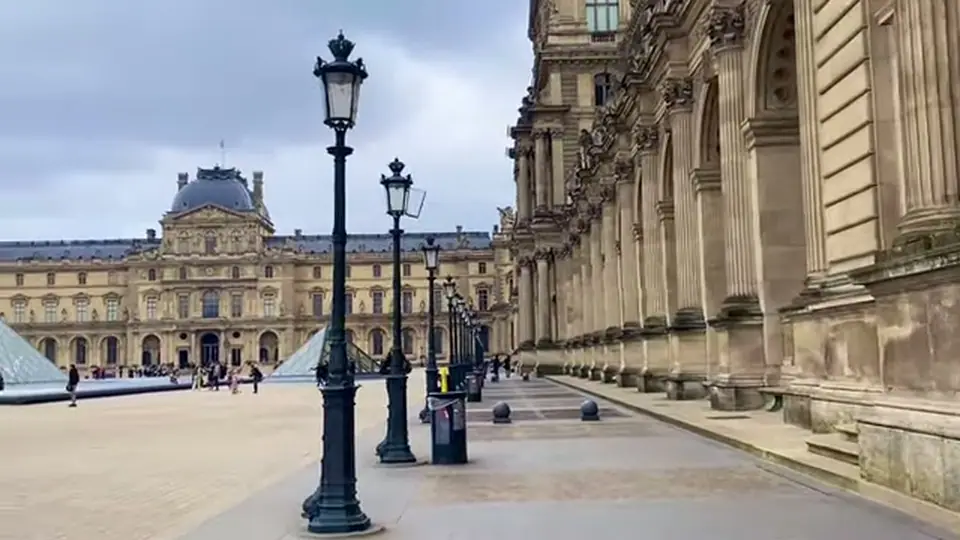
Glass pyramid at the Louvre courtyard framed by historic palace wings

🎫 Tickets, tours & discounts

Which ticket to choose

For most first-time visitors, the basic timed-entry ticket is enough. It gives access to the permanent collections and temporary exhibitions, and the real value comes from choosing a sensible route rather than paying for a more expensive label.

Pay more when it solves a real problem: a guided visit if you want context, a hosted entry if you are nervous about finding the correct entrance, or a small-group tour if you only have 2–3 hours and want the highlights without decision fatigue. “Fast-track” does not mean walking past security; everyone still goes through screening.

  • Basic timed ticket: best for independent visitors who can follow a map and choose 2–3 priorities.
  • Ticket plus audio guide: good if you want structure without joining a group.
  • Guided tour: best for a short, focused visit or for understanding the palace, schools of art, and historical context.
  • Paris Museum Pass: useful only if you are visiting several major museums and monuments, not just the Louvre.
TipThe common first-time mistake is buying the most expensive entry product and then trying to “do the whole Louvre.” A better plan is to book a timed slot, enter via Carrousel du Louvre or Passage Richelieu, and focus on Denon, Sully, and one extra area if energy allows.

Best time to go

The calmest useful window is Wednesday or Friday after 18:00, when the museum stays open until 21:45 and the atmosphere is noticeably easier than in the middle of the day. This is the best choice if you want to see the major works with fewer bottlenecks around the Mona Lisa, Venus de Milo, and Winged Victory of Samothrace.

Morning entry works well for families and visitors who want more stamina, but it is not automatically empty. Midday brings the heaviest mix of tour groups, school groups, and first-time visitors, especially around the Denon Wing.

For a solo visit, choose an evening slot and move at your own pace. For families, choose a morning slot and keep the route short. For photographers, the Pyramid and palace courtyards are better outside golden-hour light, while inside the museum comfort matters more than sunlight because flash, tripods, and selfie sticks are not allowed.

Combos and discounts

The Louvre’s most useful “combo” is not a flashy bundle: the standard ticket also covers the Musée National Eugène-Delacroix on the same day and the following day. That is a practical add-on if you are staying around Saint-Germain-des-Prés or want a smaller museum after the scale of the Louvre.

The Paris Museum Pass can save money if you plan at least three paid museum or monument visits during the pass period. It is not a shortcut around choosing a Louvre time slot, so treat it as a budgeting tool rather than a magic entry card.

Free admission applies to visitors under 18 and to residents of the European Economic Area under 26 with valid proof. If you qualify for free entry, you still need a timed reservation. Children do not make the Louvre cheaper by reducing the time needed; plan the visit around stamina, not just price.

ImportantDo not buy a city pass for the Louvre alone. It only makes sense when your Paris plan also includes places such as Musée d’Orsay, Centre Pompidou, Sainte-Chapelle, the Arc de Triomphe, or other included paid sites.

When a tour is worth it

A guided tour is worth it if this is your first Louvre visit, you have limited time, or you want someone to connect the artworks to the building’s history as a former royal palace. A good guide does more than point at the Mona Lisa: they explain why certain rooms matter, how the collections are organized, and what to skip without guilt.

Self-guided is enough if you already know your priorities, enjoy reading labels, or prefer to linger in quieter departments such as Near Eastern Antiquities, Egyptian Antiquities, or French sculpture. In that case, add the audio guide and build a 3–4 hour route instead of paying for a tour.

For most travelers, the best compromise is simple: basic timed ticket for independent visitors, guided tour for first-timers who want context, Paris Museum Pass only for a museum-heavy itinerary.
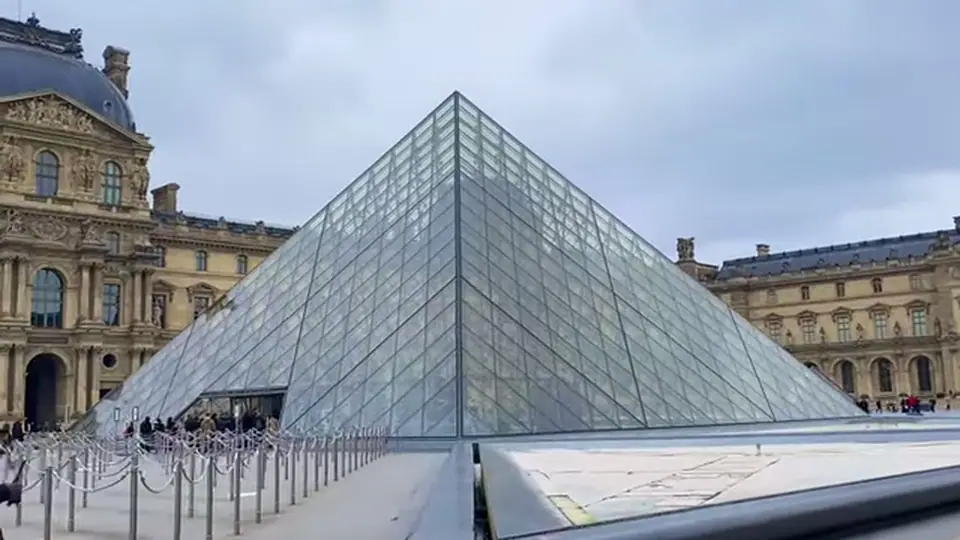

Louvre courtyard with colonnade, lampposts and glass pyramid under a gray winter sky
Weather now
Paris, France
NowMostly clear 🌤️
Temperature15°C
VisibilityExcellent
AerosolsClean air · AOD 0.17

Good conditions for visiting today.

AOD — how much dust and haze in the air dim the distant view. 0 clean, >0.4 noticeable, >0.7 heavy.

Crowd indicator

Mini-calculator based on crowd levels by day and time.

When to go?

Mini-calculator based on crowd levels by day and time.

Best time at Mon — 10:00

This day is usually noticeably busy. This slot has a higher chance of a comfortable visit: fewer people and calmer pace.

30–50% · Quiet60–80% · Moderate90–100% · Crowded

Nearest days

Today
10:0076%
12:0090%
14:0094%
16:0086%
17:0078%
18:0066%
Tomorrow
10:0084%
12:0096%
14:0098%
16:0092%
17:0086%
18:0078%
Day after tomorrow
10:0080%
12:0092%
14:0095%
16:0088%
17:0082%
18:0072%
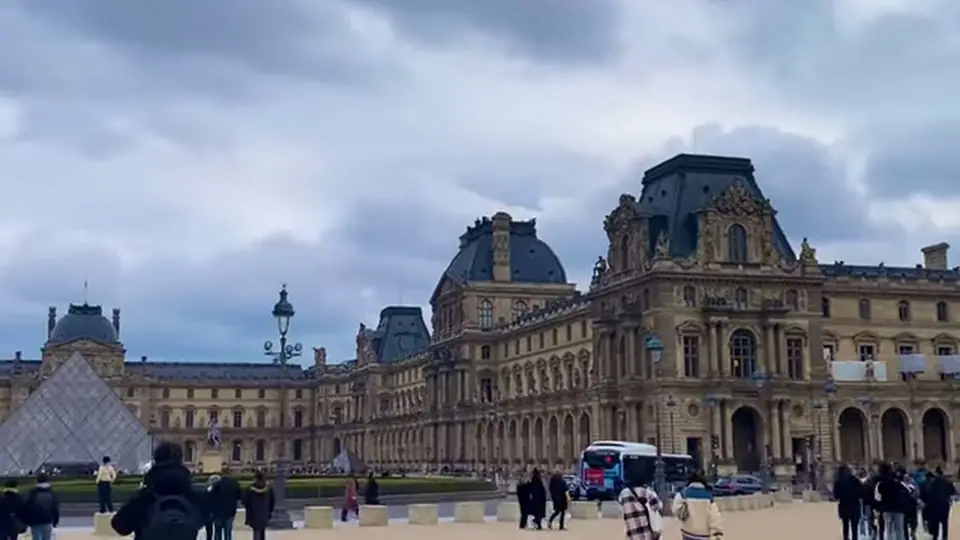
Wide view of the Louvre exterior with pyramid and palace wing

How to get there

Nearest stationPalais Royal – Musée du Louvre
AddressRue de Rivoli, 75001 Paris

How to find the entrance

1
Start at metroArrive at Palais Royal – Musée du Louvre on lines 1 or 7 and follow signs for the Louvre or Carrousel.
2
Choose your entranceFor most visitors with a timed ticket, Carrousel du Louvre is the easiest route; the Pyramid is the main entrance and the busiest.
3
Use reserved accessPassage Richelieu is for members, booked groups, museum activities, and auditorium events, not standard individual entry.
4
Pass security insideJoin the correct queue, go through the bag check, then continue into the main reception hall to start your visit.

The simplest first-time approach is to aim for the Louvre Pyramid in the Cour Napoléon, at Rue de Rivoli, 75001 Paris. Metro Palais Royal – Musée du Louvre brings you closest; from there, follow signs for Musée du Louvre and expect to reach the entrance zone before you are actually inside the museum.

The confusing part is that “the Louvre entrance” can mean several different doors. The Pyramid is the main entrance for individual visitors, while Carrousel du Louvre is an indoor entrance reached through the underground shopping gallery and is useful in bad weather.

Passage Richelieu is not the default choice for standard individual tickets; it is for eligible visitors such as groups with a reservation and membership-card holders.

ImportantYour timed ticket does not remove security. Extra time is lost at the outside queue, bag screening, and the underground orientation area before the collection entrances.
  • Have your ticket ready before the security line.
  • Keep bags within 55 x 35 x 20 cm.
  • Do not bring food, drinks, tripods, selfie sticks, or large luggage.
  • Once inside, choose your wing before moving on; the museum is too large to “just wander” efficiently.
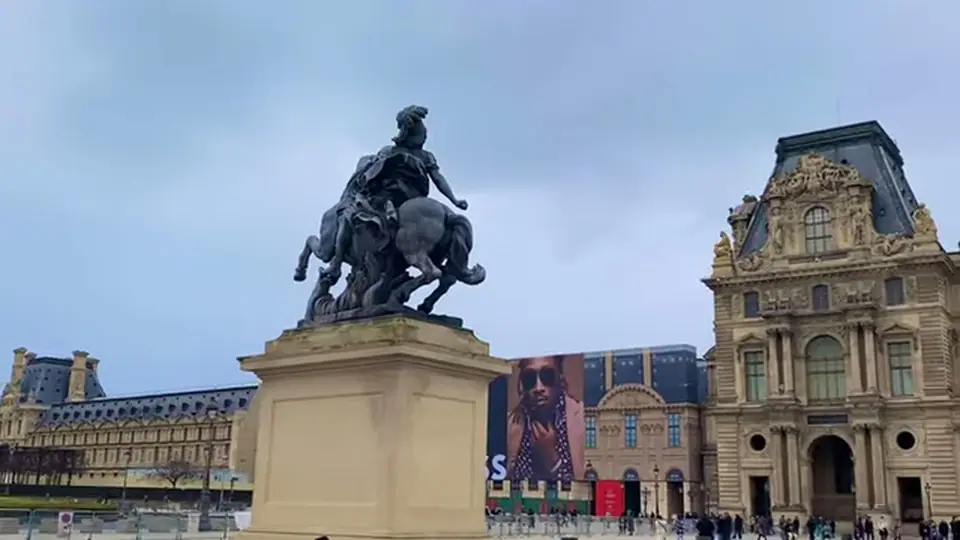
Equestrian statue in Louvre courtyard with palace buildings behind

Practical limits & what to bring

What to consider before visiting

The Louvre is a long, indoor visit with security screening before the museum zones. A timed ticket reduces ticketing uncertainty, but it does not remove the bag check, so keep your ticket and ID easy to reach and avoid arriving with anything that needs discussion at the entrance.

Plan for a lot of walking, stairs, bottlenecks, and standing, especially around the Mona Lisa, the Winged Victory of Samothrace, and the Venus de Milo. For a 3-4 hour visit, comfortable shoes matter more than smart clothes; there is no special dress code and no age limit, but this is not a relaxed place for overtired children.

Strollers are allowed, but the Louvre is a former palace with uneven routing between wings, lifts, stairs, and busy galleries. Visitors with disabilities have priority access, and wheelchairs, folding stools, walking sticks, pushchairs, and front baby carriers can be borrowed free of charge from the assistance area beneath the Pyramid in exchange for ID.

What you can and cannot bring

  • Do not bring bags, luggage, packages, drawing boards, or bulky items larger than 55 x 35 x 20 cm.
  • Do not bring large suitcases; they are not accepted into the museum areas.
  • Do not eat or drink in the exhibition rooms.
  • Do not bring excessive quantities of food or drink.
  • Do not use flash, lighting, selfie sticks, tripods, stands, or similar photography equipment.
  • Do not bring weapons, ammunition, tools such as knives or screwdrivers, blunt objects, flammable or explosive substances, aerosols likely to damage artworks, or electrical incapacitating devices.
  • Do not bring animals, except guide dogs and assistance dogs.
  • Personal photography and video are allowed in the permanent collections when used for private, non-commercial purposes.
  • A small handbag or small backpack is allowed if it stays within the 55 x 35 x 20 cm limit and passes security.
  • A small water bottle is fine to carry in your bag, but do not drink from it in the galleries.
  • Sketching is allowed in limited form: pencil on paper or light cardboard no larger than 50 x 40 cm, without blocking other visitors.
ImportantWear backpacks on the front or carry them low at your side in crowded rooms. It is both safer for the artworks and easier in the busiest galleries.

Lockers and belongings

Free self-service lockers are available beneath the Pyramid and at Porte des Lions. They are for smaller items only; anything over 55 x 35 x 20 cm is not admitted, so do not arrive with airport luggage and expect to store it inside. Collect everything the same day, and do not leave valuables in the lockers.

Umbrellas that do not fit inside a bag must be left in the cloakroom umbrella stands. Helmets, luggage, and bulky personal items are not allowed in the exhibition rooms and must be stored if they fit the accepted size.

Strollers are allowed inside the museum. If your own stroller is too large for the museum lifts, borrow a Louvre pushchair beneath the Pyramid; back baby carriers are not allowed, but front baby carriers are available there.

💡 Useful tips

  • The best unobstructed elevated photo angle of the glass pyramid from the inside is found at the escalator landing on the first floor of the Richelieu wing.
  • The Cour Marly provides a naturally lit, quiet space filled with monumental marble sculptures under a massive glass roof, making it the ideal spot for a sensory break away from the dense crowds.
  • Instead of getting lost trying to navigate the confusing upper-floor connections between wings, always return to the Hall Napoléon under the pyramid to switch sections efficiently.
  • Look closely at the intricately gilded ceilings in the Galerie d'Apollon, as this opulent space served as the direct architectural prototype for the famous Hall of Mirrors at Versailles.
  • The museum's floors transition constantly between hard marble, historic parquet, and uneven stone, making thick-soled walking shoes absolutely essential to prevent severe foot and back fatigue.
  • If the main painting galleries become overwhelmingly crowded, escape to the top floor of the Sully wing, which remains nearly empty and offers excellent elevated views over the Cour Carrée.
  • When examining the Great Sphinx of Tanis in the Egyptian antiquities section, walk entirely around its base to spot the partially erased cartouches where successive pharaohs carved over their predecessors' names.

Location and what's nearby

What kind of neighborhood

  • The Louvre sits in Paris’s ceremonial center: palace façades, arcades, formal gardens, and the Seine all within a compact walk.
  • This is a high-density visitor district, but it still works well for slow strolling if you use the gardens, quays, and covered passages.
  • The area fits a culture-heavy day: museum time, historic squares, design shops, riverside views, and a proper dinner nearby.
  • Shopping ranges from Rue de Rivoli souvenirs to Rue Saint-Honoré fashion and Samaritaine department-store browsing.

Walkable nearby (up to 15 minutes)

  • Jardin des Tuileries — formal gardens for a calm post-museum reset · 5 min
  • Palais Royal — elegant arcades, gardens, and striped Buren columns · 6 min
  • Musée des Arts Décoratifs — design, fashion, and decorative arts beside the Louvre · 5 min
  • Saint-Germain-l’Auxerrois — Gothic church facing the Louvre colonnade · 4 min
  • Pont des Arts — classic Seine footbridge with Institut de France views · 7 min
  • Samaritaine — restored department store for architecture and shopping · 10 min
  • Galerie Vivienne — covered passage with boutiques and old Paris atmosphere · 13 min
  • Place Vendôme — grand square for jewelry houses and palace-hotel façades · 14 min

15-30 minutes by transport

  • Musée d’Orsay — Impressionist follow-up in a former railway station · 15 min
  • Le Marais — boutiques, galleries, falafel, and Place des Vosges · 18 min
  • Saint-Germain-des-Prés — Left Bank cafés, bookshops, and gallery streets · 18 min
  • Arc de Triomphe — monumental western axis after the Louvre-Tuileries line · 20 min
  • Eiffel Tower — big-ticket Paris pairing for a full sightseeing day · 25 min
  • Montmartre — hilltop views and village streets after central Paris · 25 min

Where to eat nearby

  • Café Marly — Louvre courtyard terrace and polished French plates · expensive · reservation essential · 3 min walk
  • Le Fumoir — clubby Franco-international dining opposite the Louvre · above average · reservation desirable · 4 min walk
  • Juveniles — seasonal bistro cooking and serious wine list · moderate · reservation desirable · 11 min walk
  • Sanukiya — handmade udon near Rue Sainte-Anne · moderate · walk-ins fine · 12 min walk
  • Bistrot Victoires — classic Paris bistro and strong-value staples · budget · walk-ins fine · 12 min walk

Ready-made day route

Start with the Louvre, then step out through the Tuileries for fresh air before looping to Palais Royal and Galerie Vivienne. For lunch, use Sanukiya if you want something quick and casual, or Le Fumoir if you want to sit down close to the museum.

Continue toward Samaritaine and Pont des Arts for Seine views, then finish with dinner at Juveniles if you are staying in the Palais Royal-Richelieu side of the neighborhood.

NoteDo not try to pair the Louvre with too many major museums in one day; one big museum plus gardens, passages, and a good meal makes the area work much better.
Reference

Facts

Read more

Numbers and Scale

  • Total area: 360,000 m2, making the Louvre the largest art museum by overall footprint.
  • Display space: 72,735 m2, so a one-visit plan needs strict priorities, not a room-by-room approach.
  • Collection on view: 38,000 artworks are displayed across 8 departments, far beyond a single-day route.
  • Layout: 3 main wings and 5 public levels, which is why backtracking costs real time.
  • Annual attendance: 9,046,000 visitors, so the busiest icons feel more like crowd management than quiet viewing.
  • Pyramid: 21.6 m high with a 34 m square base, acting as both landmark and underground light well.
  • Museum opening: 1793, after centuries as a fortress and royal palace rather than a purpose-built museum.

Myths and Misconceptions

  • Myth: The glass pyramid has 666 panes. Reality: The main pyramid uses 673 panes: 603 rhombi and 70 triangles.
  • Myth: The Louvre was built first as a museum. Reality: It began as a fortress under Philippe Auguste before becoming a royal palace.
  • Myth: Napoleon stole the Mona Lisa from Italy. Reality: Francois I acquired Leonardo's painting long before Napoleon's rule.
  • Myth: The Mona Lisa is a large canvas. Reality: It is a 77 x 53 cm poplar panel, smaller than many expect.
  • Myth: I. M. Pei designed only a decorative pyramid. Reality: The pyramid reorganized visitor flow into the underground Hall Napoleon.

Rare and Unusual

  • The Medieval Louvre on Level -1 preserves fortress foundations and the old moat, a sharp contrast to the polished galleries above.
  • The original fortress moat was 10 m wide, giving a physical sense of how defensive the first Louvre really was.
  • Cour Marly shelters sculptures from the vanished Chateau de Marly under a glass roof, not from the Louvre's original interiors.
  • Salle du Manege began as an imperial riding hall under Napoleon III; its animal carvings still hint at the stable function.
  • Salle des Caryatides hosted Henri IV's funeral ceremony, so it is both a sculpture room and a site of royal state ritual.
  • Marlene Dumas's 9-part Liaisons cycle makes her the first contemporary woman artist in the Louvre's permanent collection.
Background

History

Read more

From fortress to public museum

The Louvre matters because it is not just a museum filled with famous works; it is one of Paris’s great historic spaces in its own right. It began as a medieval fortress, then grew into a royal palace, so a visit is also a walk through the political and artistic history of France.

Its biggest turning point came when the palace was transformed into a public museum. That change turned a former seat of royal power into a place built for shared access to art, which is still the key to understanding the Louvre today: the collections are extraordinary, but so is the idea behind them.

For visitors, this history explains why the museum feels so layered. You move from grand palace rooms to sculptures from antiquity, Renaissance painting, and decorative arts in a setting that was never designed as a neutral gallery.

The result is what makes the Louvre distinctive: you are seeing masterpieces inside a monument that is itself part of the story.

♿ Accessibility & families

Accessibility & family policy

  • Wheelchair and reduced-mobility access: The Louvre is accessible by lift via the Pyramid entrance, and via lifts from the Carrousel du Louvre side at 99 Rue de Rivoli. Visitors with disabilities receive free admission for the visitor and one accompanying person, plus priority access at reception and entry checkpoints. Free loan equipment includes wheelchairs, folding stools, canes and multifunction rolling chairs, and there are accessible toilets under the Pyramid and inside the museum.
  • What the route feels like in practice: This is a very large museum, so even with lifts it can be tiring. Long walking distances, crowd bottlenecks around major highlights, and slower lift routes are the main friction points for wheelchair users, older visitors, and anyone who cannot stand for long. Staff can help with route planning from the assistance area under the Pyramid.
  • Strollers and babies: Prams are allowed throughout the museum. If your stroller is too bulky for the lifts, the museum can lend you a pushchair under the Pyramid. Front baby carriers are allowed; back carriers are not. For families with infants, the Studio in the Richelieu wing includes a baby area with a nursing chair, bottle warmer and microwave.
  • Children and supervision: Children under 18 enter free. Children under 12 may not visit unaccompanied; they need an adult with them. For families with kids under 12, the main drawbacks are the museum’s scale, lots of standing, and the busiest rooms being noisy and crowded, so shorter visits focused on one wing work better than trying to cover the whole museum.

🏢 On-site amenities

  • Restrooms: Yes. Toilets are available in the welcome area under the Pyramid and throughout the museum galleries. They are free to use. Most restroom areas also have baby-changing tables.
  • Food and drink: There are several places to eat inside the Louvre complex, from quick counters to sit-down options. The most useful on a museum visit are Café Pyramide for a proper indoor break and Le Café Mollien for a more scenic stop inside the palace; there are also takeaway counters and bakery-style options if you just want coffee or something fast.
  • Shops: Yes. The main Book and Gift Shop is under the Pyramid, with smaller sales counters in other parts of the museum. It focuses on art books, exhibition catalogues, replicas, design objects, postcards, and Louvre-branded souvenirs.
  • Wi‑Fi and water: Free Wi‑Fi is available on the `Louvre_Wifi_Gratuit` network under the Pyramid and in the exhibition rooms. The free session lasts 1 hour and can be renewed. You may bring still water; drinking is allowed away from the artworks.
  • Families: For babies, the Louvre has a dedicated baby space in The Studio, on the ground floor of the Richelieu wing. It includes a bottle warmer, microwave oven, and nursing chair.

Reliability & freshness

AuthorAksel Paris Team
PublishedApril 5, 2026
UpdatedApril 30, 2026

Related attractions

FAQ

Do I need to book Louvre tickets in advance?

Yes — book a timed entry slot before you go. Tickets start at €22, and the €5 audioguide is worth it if you want a focused first visit.

What is the best time to visit the Louvre with fewer crowds?

Wednesday or Friday after 18:00 is the best slot for a calmer visit. The museum stays open until 21:45 on those evenings.

How much time should I plan for the Louvre?

Plan 3 to 4 hours if you want the main masterpieces and one or two wings without rushing. The Louvre is too large to do properly in a quick one-hour stop.

What is the easiest way to get to the Louvre?

Take the Métro to Palais Royal – Musée du Louvre. The museum is on Rue de Rivoli, 75001 Paris.

Which entrance is best if I want to save time?

Carrousel du Louvre and Passage Richelieu are the quickest entrances. Even with a reservation, leave time for the security check.