5th Arrondissement (Latin Quarter)
The 5th arrondissement is historic Paris at its most walkable, with the Sorbonne, the Pantheon, bookshops, museums, cafés and the lively streets of the Latin Quarter. It suits travellers who want a central base, plenty of culture and an easy university atmosphere. The main trick is to look beyond Boulevard Saint-Michel: around the Botanical Garden and along the Seine, the neighbourhood feels calmer, more local and less like postcard Paris, while remaining close to the major sights.
Attractions in this area
3 places we cover here.
The Musée de Cluny occupies a 15th-century Gothic mansion built atop ancient Roman baths, offering a focused look at medieval European life. It is best known fo...
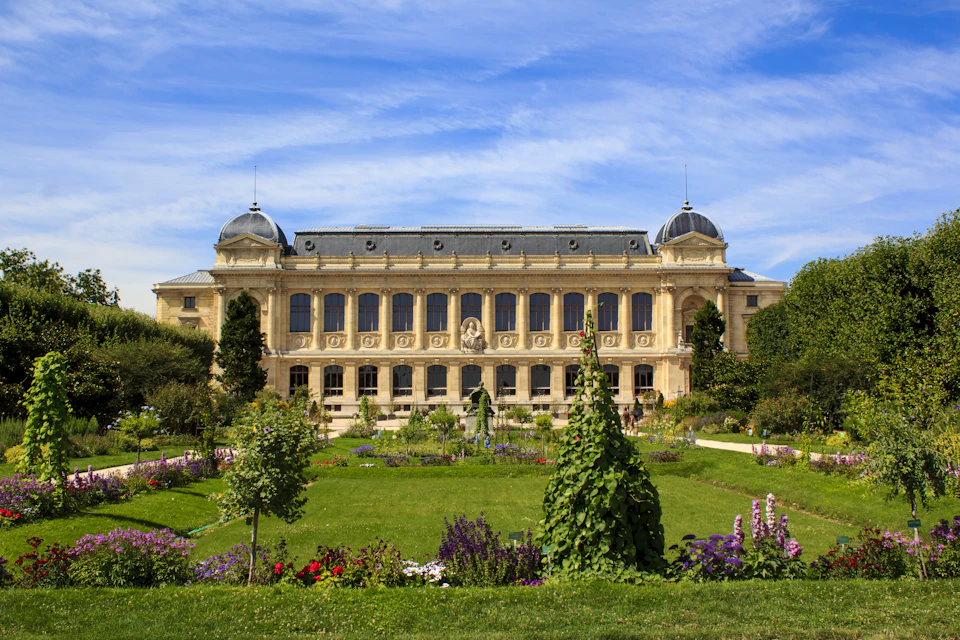
The Grande Galerie de l'Évolution offers a cinematic journey through the history of life, featuring a dramatic parade of taxidermy animals within a restored 19t...
The Panthéon is a calm, contemplative visit for travelers interested in French history, architecture and memorial sites. Inside, the experience centers on the n...
The 5th arrondissement feels like historic Paris at close range: a university quarter shaped by the Sorbonne, the Panthéon, bookshops, museums and narrow streets. It is central, lively and easy to explore on foot, with plenty of cafés and small places to pause between landmarks.
Around the Sorbonne and Boulevard Saint-Michel, the atmosphere is dense and energetic. Students, visitors and local residents share the streets, while the surrounding cafés and shops give the area a constant daytime rhythm. It can feel distinctly touristy, especially near the main sights, but the mood changes quickly once you leave the busiest routes.
The architecture is varied but consistently old-Parisian: stone façades, compact buildings, winding lanes, small squares and passages that open unexpectedly towards the Panthéon, museums or the Seine. The area rewards slow walking rather than a fixed itinerary, with details appearing at almost every turn.
For a calmer version of the arrondissement, head towards the Botanical Garden and the river. The streets there feel more residential and less postcard-like, with a stronger sense of everyday Paris and a little more breathing room.
Atmosphere
The Latin Quarter combines narrow medieval streets, 19th-century stone façades, quiet courtyards and grand civic buildings around the Sorbonne and the Panthéon. A short walk can take you from bookshops and café terraces to museum entrances, leafy squares, the Botanical Garden or the Seine.
The architecture feels layered rather than uniform: old walls, academic buildings and residential streets sit close together, with occasional views opening towards the river.
In the evening, the central streets remain lively with students, visitors, booksellers, café customers and local residents heading home.
Around Boulevard Saint-Michel, you hear conversation, traffic and the steady movement of pedestrians; farther towards the Botanical Garden and the river, the mood becomes calmer, with quieter streets and a more everyday Parisian rhythm.
How to get there
Charles de Gaulle Airport | RER B to Saint-Michel–Notre-Dame, about 40–50 minutes, €14; taxi to the Left Bank, about 45–70 minutes, €65 fixed fare. Orly Airport | Metro line 14 to Châtelet, then walk or change to line 4, about 25–35 minutes, €14; taxi to the Left Bank, about 25–45 minutes, €36 fixed fare.
Central Paris | Metro line 4 or the RER B to Saint-Michel, about 10–25 minutes, €2.55; city buses to Saint-Michel, Luxembourg or the Jardin des Plantes, about 15–30 minutes, €2.05. The Louvre, Le Marais and Notre-Dame | Walk to the Latin Quarter in about 10–25 minutes, or take metro line 4 to Saint-Michel, €2.55.
Gare du Nord and Gare de Lyon | RER B or the metro to Saint-Michel, about 15–25 minutes, €2.55; city buses take roughly 20–35 minutes, €2.05.
Getting around
The 5th arrondissement is easiest to explore on foot. The Sorbonne, the Panthéon, bookshops, cafés, museums and the Seine are close enough for walking, while the area around Boulevard Saint-Michel is compact but often crowded. Walking is less convenient on steep or narrow streets, and the busiest routes can be slow with pedestrian traffic.
The metro is useful for reaching other parts of Paris or covering the longer distance towards the Jardin des Plantes, but it is rarely worth taking for short trips within the Latin Quarter. Taxis and ride-hailing apps work, though narrow streets, traffic and pedestrian-only sections can make pick-up points awkward.
In practice, it is usually easier to walk to a larger nearby street before ordering a car.
Best time to visit
The Latin Quarter is best explored on weekday mornings, when the streets around the Sorbonne and Boulevard Saint-Michel are calmer and cafés are easier to enjoy. Late afternoon and early evening work well for a livelier atmosphere, especially near the Seine and the Jardin des Plantes.
Spring and early autumn offer the most comfortable walking weather. In summer, avoid the hottest hours and expect larger crowds at weekends, particularly around the Panthéon and major museums.
Top attractions in this area
Pantheon | A monumental former church and mausoleum where visitors can discover the history of France and enjoy views over the city. The Sorbonne | One of Paris’s most famous historic universities, surrounded by lively streets, bookshops and cafés.
Jardin des Plantes | A large botanical garden and scientific complex that offers a quieter break from the busy Latin Quarter. National Museum of Natural History | A group of museums and galleries exploring natural sciences, evolution and the diversity of life.
Musée de Cluny – National Museum of the Middle Ages | A richly atmospheric museum housed in medieval buildings, known for its Roman baths and medieval collections.
Where to stay
The 5th arrondissement has a broad mix of accommodation, from compact budget hotels and simple independent properties to comfortable boutique hotels and a smaller number of larger chain hotels. Prices tend to reflect the central location, especially around the Sorbonne, the Panthéon and Boulevard Saint-Michel.
Budget rooms are often small and practical, while boutique hotels may focus on historic buildings, characterful interiors and a quieter atmosphere.
When choosing where to stay, look beyond the busiest streets around Boulevard Saint-Michel. The area near the Jardin des Plantes and the Seine is usually calmer and feels more residential, while remaining within walking distance of the main sights.
For a first stay, prioritise walkability and access to cafés and cultural landmarks; for better value and less noise, consider the edges of the district rather than its tourist centre.
Dining
The 5th arrondissement is strongest for casual dining: crêperies, bakeries, cafés, small bistros and inexpensive international restaurants aimed partly at the student population. Food-court dining is not a defining feature, but you will find plenty of quick options for a takeaway lunch or an informal meal.
Prices are generally low to moderate, with cafés and simple eateries working well for breakfast, lunch or an early dinner. Around the Sorbonne and Boulevard Saint-Michel, many places stay open throughout the day, while smaller restaurants tend to follow more traditional lunch and dinner hours.
For a more polished meal, look towards the quieter streets and the area near the Seine, where classic French cooking and contemporary bistros are more common.
Fine dining exists but is not the main reason to choose the neighbourhood, and it comes with a distinctly higher bill than the student cafés and everyday restaurants.
The area is convenient for spontaneous meals, though the busiest tourist streets can feel repetitive; exploring side streets usually leads to better atmosphere and a more local dining experience.
Shopping
Shopping in the 5th arrondissement is more about independent bookshops, small specialist stores and food shops than large shopping centres. Around the Sorbonne and Boulevard Saint-Michel, you’ll find plenty of books, stationery, postcards and classic Paris souvenirs, while the side streets offer cafés, delicatessens and small boutiques.
For everyday shopping, Rue Mouffetard is one of the liveliest parts of the area, with food shops and a market atmosphere. The streets closer to the Jardin des Plantes are less focused on souvenirs and better suited to browsing local shops and picking up provisions.
There is no major shopping mall in the arrondissement, so the appeal lies in walking between small stores and market streets.
Practical tips
Comfortable shoes | Wear supportive shoes: the Latin Quarter is best explored on foot, with cobbled streets, slopes and long walks between sights
Clothing | Choose layers and a light rainproof jacket, especially if you plan to spend most of the day walking between museums, gardens and the Seine
Money | Cards are widely accepted, but keep a small amount of cash for cafés, small purchases and places with minimum card payments
Queues | Book or check entry arrangements for major sights such as the Panthéon in advance when possible, and allow extra time at busy hours
Avoid the main flow | Do not limit your visit to Boulevard Saint-Michel: the area around the Jardin des Plantes and the Seine is calmer and shows more everyday Paris
Safety
The 5th arrondissement is generally safe, including for visitors walking around during the day and evening. The main risks are typical of central Paris: pickpocketing in crowded areas, around major sights, on public transport and along busy streets such as Boulevard Saint-Michel. Keep valuables secure and stay aware in dense crowds.
At night, the area around the Sorbonne and Boulevard Saint-Michel remains lively, while the streets closer to the Botanical Garden and the Seine are quieter.
These parts are usually calm, but normal city precautions still apply: avoid poorly lit or empty streets, especially if walking alone, and take extra care around transport hubs and busy nightlife spots.
Photo spots
Panthéon and Place du Panthéon | Early morning for softer light and fewer people | The dome, colonnade and historic façades around the square
Rue Mouffetard | Late afternoon, when the street is still lively but the light is warmer | The narrow slope, old façades, shopfronts and everyday street life
Jardin des Plantes | Morning or late afternoon | Tree-lined paths, flowerbeds, greenhouse façades and seasonal colour
Quai de la Tournelle | Around sunset or blue hour | The Seine, Notre-Dame, Île de la Cité and the changing Paris skyline
Saint-Étienne-du-Mont and Place de l’Abbé-Basset | Early morning or after rain | The church façade, quiet square and textured stone streets near the Panthéon
Nearby neighborhoods
From the 5th arrondissement, walk across the Seine to Saint-Germain-des-Prés for galleries, cafés and elegant streets, or continue towards Île de la Cité and Île Saint-Louis for river views and historic landmarks.
The Marais is an easy next stop across the eastern bridges, while the Montparnasse area offers a livelier contrast farther south, with cafés, theatres and broad boulevards.
Area pros
Historic Paris with the Sorbonne, the Pantheon and Notre-Dame within easy walking distance
Compact, walkable streets linking museums, bookshops, cafés and lively squares
A strong introduction to Parisian culture, history and everyday university life
Plenty of atmospheric streets for exploring without a fixed itinerary
Quieter corners near Jardin des Plantes and the Seine offer a more local side of the city
Area cons
Crowded and noisy around the Sorbonne and Boulevard Saint-Michel
Tourist traffic is especially noticeable near the main landmarks and central streets
Narrow streets and dense historic buildings offer little space or privacy
Historic homes may have small rooms, limited lifts and uneven comfort
Not the best choice for those seeking quiet evenings, spacious accommodation or a car-friendly setting