8th Arrondissement (Champs-Élysées)
Paris’s 8th arrondissement is the city in its formal, high-gloss mode: Champs-Élysées, Arc de Triomphe, grand hotels, flagship boutiques, office addresses, and quieter pockets near Faubourg Saint-Honoré and Parc Monceau. It suits travelers who want to stay very central, walk a lot, and treat the price of the postcode as part of the deal. Its main trick is contrast: behind the tourist frontage, the district often works like a polished, highly convenient everyday neighborhood with a distinctly businesslike rhythm.
Attractions in this area
4 places we cover here.
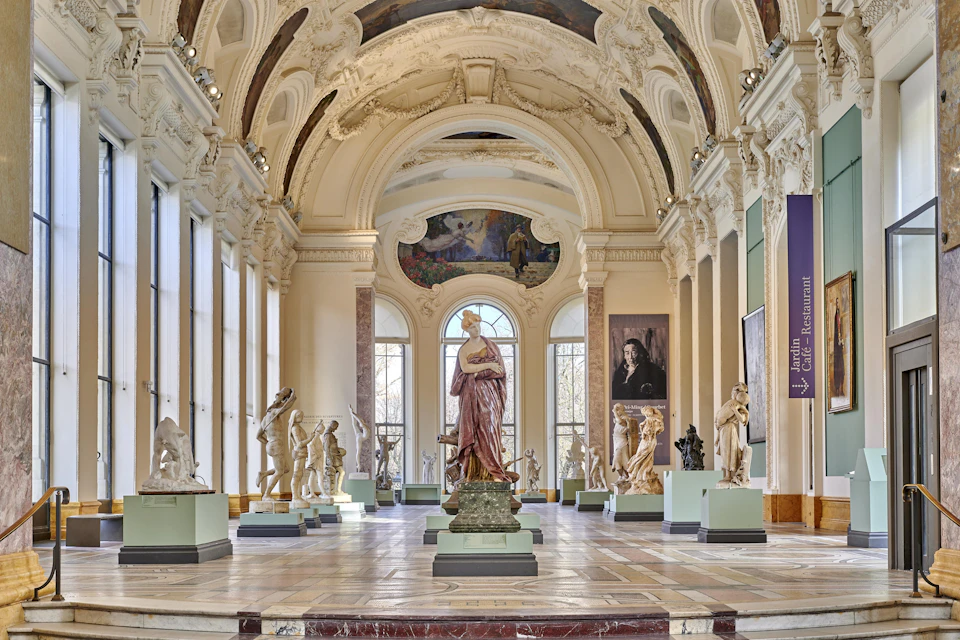
Built for the 1900 Universal Exhibition, the Petit Palais functions as the City of Paris Museum of Fine Arts. It offers a practical way to view works by Rembran...
La Galerie Dior offers an immersive journey through the history of French haute couture within the brand's historic headquarters at 30 Avenue Montaigne. It suit...
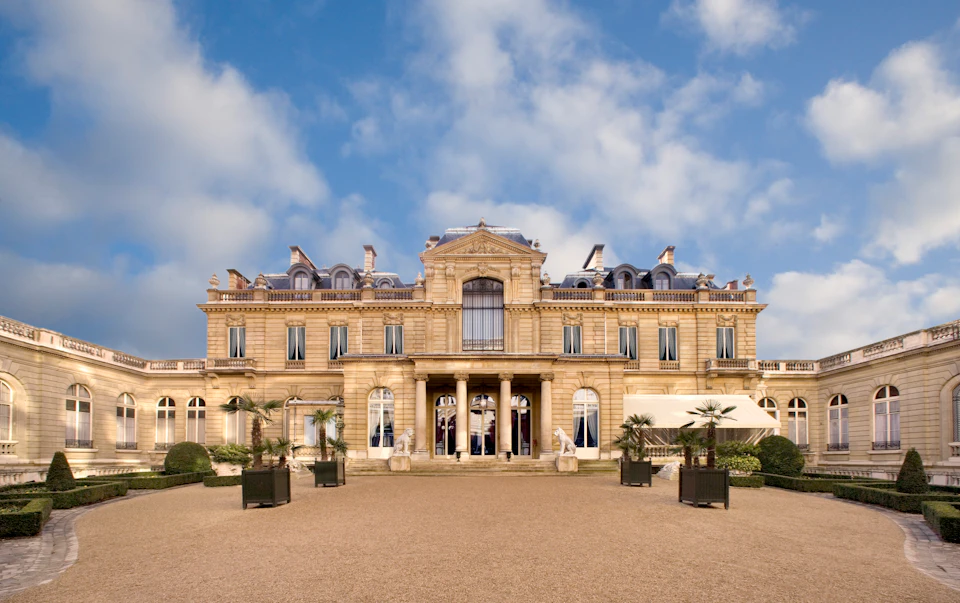
The Musée Jacquemart-André offers a rare glimpse into the opulent lifestyle of the 19th-century Parisian bourgeoisie within a perfectly preserved private mansio...
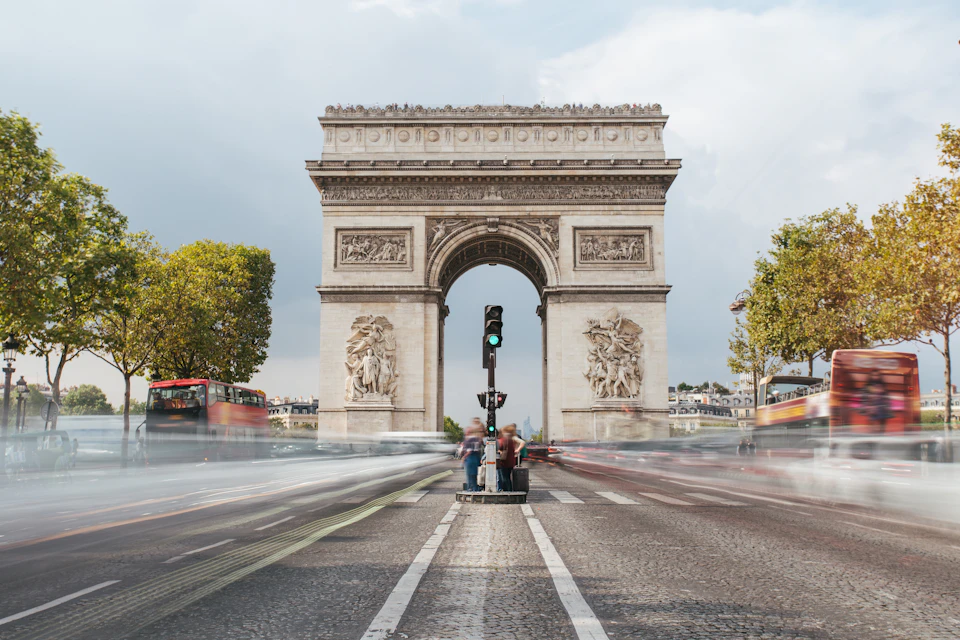
The Arc de Triomphe is a short, high-reward stop for first-time visitors who want one of Paris’s clearest city panoramas without committing half a day. You come...
The 8th arrondissement is Paris in formal dress. Around Champs-Élysées, everything feels oversized and staged: broad avenues, polished stone facades, luxury storefronts, palace hotels, embassies, and office buildings that project money and control. It is busy, visible, and very aware of its own image.
But the area is not only postcard Paris. A few streets away from the flagship stores and constant traffic, the mood turns quieter and more functional. This is one of the district’s defining contrasts: the ceremonial front coexists with a practical, almost businesslike everyday life.
People come here to shop and sightsee, but also to work, meet, and move efficiently across the city.
The architecture follows that logic. Near Faubourg Saint-Honoré, the streets feel especially disciplined and discreet, with refined facades, private mansions, and a polished kind of wealth that does not need to advertise itself.
Closer to Parc Monceau, the atmosphere softens: still elegant, still expensive, but less theatrical and more residential in rhythm.
The pace depends heavily on where you are. Around Champs-Élysées and Arc de Triomphe, it can feel crowded, loud, and in constant motion. In the quieter pockets, the arrondissement becomes composed, spacious, and surprisingly easy to inhabit.
If some parts of Paris charm you with imperfection, the 8th works differently: it wins through order, scale, and a very controlled version of urban comfort.
Atmosphere
The 8th arrondissement feels composed, polished, and slightly ceremonial. Around Champs-Élysées, the scale is grand: broad avenues, Haussmann stone facades, palace hotels, office buildings, embassies, and shop windows designed to look permanent rather than charming.
Move toward Faubourg Saint-Honoré and the mood becomes even more controlled and discreet, with luxury addresses and a quieter kind of wealth. Near Parc Monceau, the district softens: still elegant and expensive, but more residential, with calmer streets and a less theatrical pace.
Street life depends heavily on the exact pocket. On the main avenues, you see shoppers, business travelers, office workers, chauffeurs, and a steady stream of visitors moving between landmarks and flagship stores.
In the quieter sections, the crowd shifts toward residents, professionals, and people heading to meetings or dinner.
In the evening, the arrondissement is more lit than lively: car traffic, hotel entrances, restaurant terraces, and the constant background movement of central Paris, but rarely the improvised, neighborhood energy found in less formal districts.
How to get there
Charles de Gaulle Airport | Taxi to the 8th arrondissement on the Right Bank is a fixed fare of about €56 and usually takes 35–60 min; by RER B + Metro line 1, expect about 45–60 min for around €13
Orly Airport | Taxi to the 8th arrondissement on the Right Bank is a fixed fare of about €45 and usually takes 30–45 min; by Metro line 14 with a change, expect about 35–50 min for around €11–13
Châtelet / central Paris | Metro line 1 goes straight to Champs-Élysées and Charles de Gaulle–Étoile in about 10–20 min; one ride costs about €2–3, while a taxi is usually 15–30 min depending on traffic
Louvre / Tuileries | Metro line 1 is the easiest option and takes about 10–15 min to the Champs-Élysées side of the district; count about €2–3, or roughly 10–20 min by taxi if traffic is light
Eiffel Tower | Metro line 9 or a short taxi ride gets you to the Champs-Élysées area in about 10–20 min; expect about €2–3 by metro or roughly €12–20 by taxi depending on traffic
Getting around
This is a very walkable part of Paris if you choose your pocket well. Around Champs-Élysées, Faubourg Saint-Honoré, Madeleine and Parc Monceau, many routes make sense on foot, and the streets are generally easy to read.
The catch is scale: the avenues are wide, the blocks are longer than they look on the map, and the area around Arc de Triomphe can feel busy, noisy and slower to cross than expected.
For longer jumps, the metro is usually the most practical option, with several useful stations spread across the arrondissement and easy links to the rest of central Paris.
Taxis and app-based cars are convenient for hotel-to-meeting or late-evening rides, but traffic around Champs-Élysées, Concorde and Etoile can be heavy, so a short trip may take longer than you think.
Inside the district, the best routine is simple: walk when the distance is reasonable, use the metro when it is not, and treat cars as a comfort rather than a time-saver.
Best time to visit
The area works best in the morning or early evening, when the grand avenues look their sharpest and the streets around Faubourg Saint-Honoré or Parc Monceau feel calmer. Spring and early autumn are the most comfortable seasons for walking.
In summer, heat reflects hard off the wide boulevards and the Champs-Élysées can feel tiring by midday. Weekends, holidays, and late afternoons around major sights are the busiest, so go early if you want a smoother, less crowded visit.
Top attractions in this area
Arc de Triomphe | One of Paris’s defining monuments, set at the top of Champs-Élysées, and the clearest reason to come here for big-city views and the full ceremonial scale of the district.
Champs-Élysées | The arrondissement’s main axis, known for its grand avenue feel, flagship stores, cafés, and nonstop foot traffic that shows the area at its most public and polished.
Grand Palais | A landmark Beaux-Arts building with a vast glass roof, worth noting for its architecture alone and for the major exhibitions and events it regularly hosts.
Petit Palais | The more intimate counterpart to Grand Palais, with elegant architecture and an art museum setting that offers a quieter cultural stop in the middle of a very busy area.
Parc Monceau | The arrondissement’s calmer side: a refined park near more residential streets, good for a walk when you want a break from the traffic and spectacle around Champs-Élysées.
Where to stay
In the 8th arrondissement, the hotel stock leans clearly upscale. Around Champs-Élysées, Avenue George V, and Faubourg Saint-Honoré, the dominant format is large luxury hotels and polished international chain properties, with a smaller number of discreet boutique hotels on quieter side streets.
This is one of the most expensive addresses in Paris, so even mid-range options here often feel expensive for what they offer in terms of room size. True budget stays are limited; if price matters, this is rarely the most efficient part of the city to book.
The main decision is not so much hotel category as micro-location. If you want postcard Paris, late openings, and immediate access to shopping and major sights, stay close to Champs-Élysées and Arc de Triomphe, but expect more traffic and a less local rhythm.
For a calmer, more businesslike stay, look toward Faubourg Saint-Honoré or the streets closer to Parc Monceau, where the atmosphere becomes quieter, more residential, and slightly less exposed.
In this arrondissement, it makes sense to prioritize exact location, sound insulation, and overall hotel standard over chasing a lower rate.
Dining
Dining in the 8th is polished, expensive, and split between two clear modes.
Around Champs-Élysées, George V, and the major avenues, you get the international side of Paris dining: hotel restaurants, brasseries built for long lunches and late dinners, upscale French menus, steak houses, Japanese counters, and luxury-brand cafés aimed at shoppers and business travelers.
Casual dining exists, but here “casual” often still means a smart room, full table service, and a bill above the Paris average.
Fine dining is a major part of the landscape, especially in and around palace hotels and the streets near Faubourg Saint-Honoré, where tasting menus, formal service, and wine-heavy checks are standard.
The practical everyday layer is quieter but real. On the office-heavy streets, you will find bakeries, cafés, takeaway salad and sandwich spots, and business-lunch addresses serving a faster midday crowd; this is the most useful part of the arrondissement if you are not dining for occasion.
There is no strong food-hall culture here in the way you find in newer mixed-use districts, and budget eating is limited by Paris standards. Expect breakfast from early morning in cafés and hotels, lunch service geared to professionals, and dinner stretching late in the more high-profile zones.
Average spend trends high across the arrondissement: quick meals are available but not especially cheap, standard sit-down dinners are usually mid-to-high, and fine dining goes straight into special-occasion territory.
Shopping
Shopping here is split between spectacle and serious luxury. Champs-Élysées is the obvious headline: international flagships, beauty counters, sportswear, car showrooms, and the kind of storefronts built for first-time Paris walks.
Around Avenue Montaigne and Faubourg Saint-Honoré, the mood shifts from mass visibility to old-money polish: major fashion houses, jewelry, leather goods, and discreet addresses behind immaculate windows. If shopping is part of why you booked this area, this is one of the city’s strongest districts.
For something less theatrical, look beyond the main avenue. The streets around Faubourg Saint-Honoré feel more controlled and more local to the neighborhood’s daily luxury rhythm, while the tourist end near Arc de Triomphe leans heavily into souvenirs, branded gifts, and easy Paris memorabilia.
There is no big market culture here in the usual neighborhood sense, but you do get a few smaller specialist and gourmet spots rather than the broad, everyday shopping scene of more residential parts of the city.
Practical tips
Shoes | You will walk more than you expect: the avenues are wide, distances look shorter on the map, and smart comfortable shoes make more sense than dressy ones during the day | Budget | This is one of those areas where you can overspend by inertia, so decide in advance what matters more to you here: the address, shopping, or convenience | Timing | Around Champs-Élysées and Arc de Triomphe, go early or later in the evening if you want fewer crowds and a calmer pace | Dining | Do not default to the first place on a grand avenue; a short walk toward quieter side streets usually feels less touristy and more relaxed | Expectations | The most common mistake is booking here for “local Paris” and then being surprised by the polished, businesslike atmosphere and heavy tourist traffic near the landmarks
Safety
The 8th arrondissement is generally a safe and well-managed part of Paris, especially by big-city standards.
By day, the main thing to watch for is petty theft in the most touristed zones around Champs-Élysées, Arc de Triomphe, and busy metro entrances: pickpocketing, distraction scams, and phone snatching can happen where there are crowds and visitors. Otherwise, the area feels orderly, polished, and easy to navigate.
At night, the big avenues usually stay active, well lit, and straightforward, while some office-heavy streets can feel quieter and more impersonal once the workday ends. That is usually more about atmosphere than real danger.
Basic Paris habits are enough here: keep valuables out of sight, stay aware in crowds, and be a little more attentive around major sights and late-night transport connections.
Photo spots
Arc de Triomphe from Avenue de Friedland or Avenue de Wagram | early morning or blue hour | the monument framed by Haussmann façades, broad avenues, and cleaner traffic lines than later in the day Champs-Élysées looking west toward Arc de Triomphe | just after sunrise or late evening | the grand perspective of the avenue, rows of trees, flags, headlights, and the classic postcard axis Pont Alexandre III toward the Grand Palais side of the 8th | sunrise or sunset | ornate lamps, gilded details, Seine reflections, and one of the best ceremonial views into the arrondissement Parc Monceau edges and the streets around it | morning, especially on a clear weekday | elegant gates, curved paths, and quieter 8th-arrondissement architecture with a softer, less touristy mood Rue du Faubourg Saint-Honoré near the embassy and luxury retail stretch | early morning | polished stone façades, discreet storefronts, and the district’s formal, high-status side without the midday crowds
Nearby neighborhoods
From here, it is easy to move between several very different parts of Paris. To the west, Ternes and the edges of 17th arrondissement feel more residential. Cross the Seine for the large museums of 16th arrondissement.
Head east to Madeleine and Opéra for department stores and busy central streets, or continue toward Saint-Lazare and the lower slopes of Montmartre for a less polished, more everyday rhythm.
Area pros
A very central base with many classic Paris sights within walking distance or a short ride
Easy to navigate, with broad avenues and a clear city layout that works well for a first stay
Strong hotel, shopping, and dining infrastructure, especially if comfort matters more than budget
A polished, safe-feeling, well-connected part of the city that makes moving around simple
A good mix of postcard Paris around Champs-Élysées and calmer, more residential streets toward Parc Monceau
Area cons
Not a good fit if you want everyday neighborhood life: parts of the 8th feel more polished, corporate, and hotel-heavy than local Around Champs-Élysées, crowds, traffic, and noise can wear you down fast, especially in peak season Prices are high across the board, and you often pay as much for the address as for the actual hotel or apartment The area can feel formal and slightly impersonal, with fewer low-key cafés, bars, and independent spots than in more residential districts