9th Arrondissement (Opéra)
The 9th arrondissement is central, energetic Paris around the Palais Garnier, boulevard Haussmann and the grand department stores. It suits visitors who want easy transport, major sights, shopping, theatres, concert venues, bars and plenty of evening activity close at hand. Its main trick is the shift in atmosphere: the broad boulevards are busy, polished and intensely urban, while a turn into the side streets reveals quieter corners, residential buildings, old passages and a more local rhythm.
Attractions in this area
1 place we cover here.
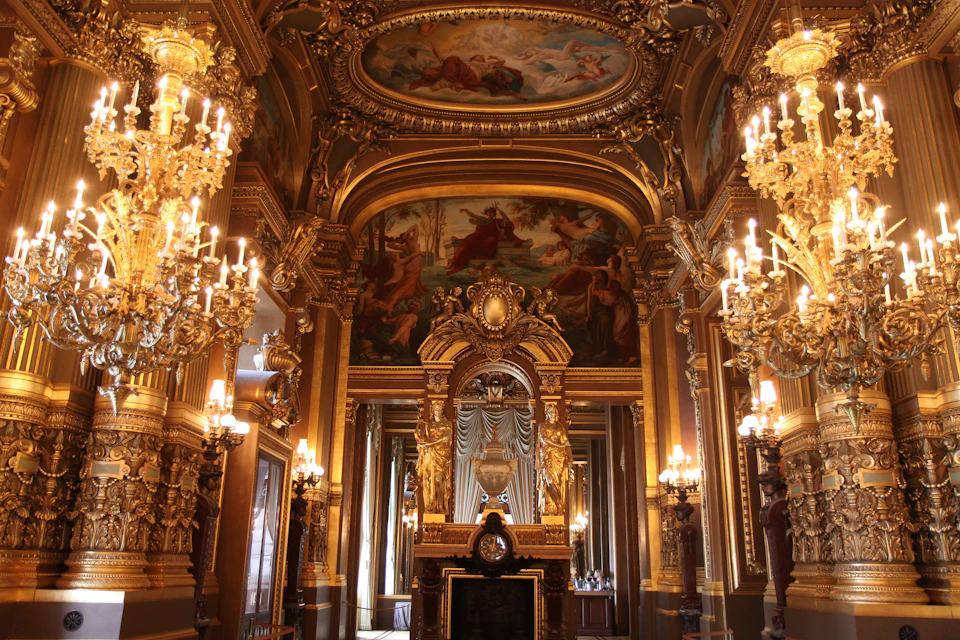
The 9th arrondissement lives on contrasts. Around the Palais Garnier, Boulevard Haussmann and the department stores, the streets are broad, elegant and busy, with grand façades, shop windows and a steady flow of commuters and visitors. It is unmistakably central Paris, but not purely formal or tourist-facing.
Move away from the main arteries and the atmosphere becomes more intimate. Haussmannian buildings sit alongside theatre façades, old passages and smaller streets lined with cafés. The change can be quick: one turn from a crowded boulevard is often enough to find a quieter, more residential stretch of the city.
By day, the area feels energetic and purposeful, shaped by offices, shopping and sightseeing. In the evening, theatres, bars, concert venues and restaurants bring a different rhythm, especially around the streets between the grands boulevards and Pigalle.
The 9th is urban rather than picturesque, with little greenery and plenty of movement, but that is part of its appeal. It suits travellers who like to step out into a lively city scene, with culture, shopping and nightlife close at hand, while still having calmer corners to retreat to.
Atmosphere
The 9th arrondissement combines grand Haussmannian façades with theatrical landmarks, covered passages and narrower streets lined with cafés.
Around Palais Garnier, Boulevard Haussmann and the department stores, the streets feel polished, busy and intensely urban: buses glide past ornate buildings, shoppers move between shop windows, and office workers fill the pavements at lunchtime.
A few turns away, the scale becomes more intimate, with apartment buildings, local cafés and quieter residential streets.
In the evening, the district changes character without losing its energy. You hear conversations spilling from bars, the murmur of restaurant terraces, traffic along the main boulevards and the flow of people heading to theatres, concerts and late dinners.
The crowd is mixed: visitors staying in central Paris, Parisians meeting after work, shoppers, theatre-goers and residents returning home. It is a lively, dressed-up part of the city, but its quieter side appears once you leave the main avenues.
How to get there
Charles de Gaulle Airport | RER B to Châtelet–Les Halles, then Metro line 7 or a short walk; around 45–55 minutes, €14. A taxi usually takes 45–75 minutes and costs roughly €55–€70. Orly Airport | Metro line 14 to Madeleine or Châtelet, then walk or change for the Opera area; around 30–40 minutes, €14.
A taxi usually takes 30–50 minutes and costs roughly €40–€55. Gare du Nord | Metro line 4 to Strasbourg–Saint-Denis, then line 8 or 9 towards the Opera area; around 15–20 minutes, €2.55. Louvre Museum or the Marais | Metro line 8 or 9 to Richelieu–Drouot, Grands Boulevards or Opéra; around 15–25 minutes, €2.55.
Walking takes roughly 25–35 minutes.
Getting around
The 9th arrondissement is easy to explore on foot, especially between Opéra, the department stores, Saint-Lazare and the nearby theatres. Walking is often faster than taking a car on Boulevard Haussmann, where traffic, crossings and crowds can slow you down.
The quieter streets are more pleasant, but pavements around the main shopping areas become busy during the day.
The metro is the most practical way to leave the area or cross it quickly, with major stations around Opéra, Havre–Caumartin and Saint-Lazare. Taxis and ride-hailing apps are useful late at night or with luggage, but journey times vary sharply with traffic, particularly on the main boulevards.
For short trips within the arrondissement, a combination of walking and metro is usually more convenient than a car.
Best time to visit
The 9th arrondissement is best explored on weekday mornings, when the streets around the Opéra and department stores are less crowded and the city feels more composed. Early evening is ideal for theatres, bars and a livelier atmosphere, especially after offices empty.
Spring and autumn offer the most comfortable conditions for walking. In summer, avoid the hottest part of the afternoon; weekends are busier around the major shopping streets, though quieter side streets remain pleasant.
Top attractions in this area
Palais Garnier | Paris’s grand opera house, known for its ornate interiors and one of the city’s most impressive architectural façades. Galeries Lafayette Haussmann | A landmark department store with fashion, beauty, gourmet shopping and a celebrated domed interior.
Printemps Haussmann | A historic department store offering fashion, homeware and panoramic views across central Paris. Musée Gustave Moreau | A former home and studio displaying the symbolist painter’s works in an intimate, atmospheric setting.
Musée Grévin | Paris’s wax museum, where famous figures are presented in elaborate historical and contemporary scenes.
Where to stay
The 9th arrondissement offers a broad range of accommodation, from large international hotel chains near the Opéra and boulevard Haussmann to smaller boutique hotels on the quieter side streets.
Premium properties tend to focus on grand architecture, polished service and central locations, while mid-range hotels are often the most practical choice for combining comfort, transport links and access to the department stores, theatres and nightlife.
Budget options do exist, but prices are generally higher than in less central districts, especially around the Opéra and the major shopping streets.
For a quieter stay, look beyond the busiest boulevards and choose a hotel on a smaller street; for maximum convenience, prioritise proximity to a Metro station and expect more street noise, foot traffic and activity.
Dining
The 9th arrondissement has a broad, convenience-driven dining scene shaped by offices, shoppers, theatre-goers and hotel guests. Around the grands magasins and major boulevards, expect food halls, takeaway counters, bakeries and casual dining with French, Mediterranean, Asian and international options.
Lunch is the busiest period, while many places reopen for dinner before or after theatre performances. A quick meal or food-court stop is usually budget to moderate; cafés and casual restaurants sit in the middle range, with higher prices in the most central and tourist-heavy streets.
Fine dining is less dominant than in some of Paris’s traditionally gastronomic districts, but the arrondissement still offers polished restaurants and elegant dining rooms, especially around Opéra and the quieter streets behind the main avenues.
The evening rhythm is varied: early dinners, pre-theatre meals, late drinks and relaxed bar food all fit naturally into the neighbourhood.
Expect restaurant bills above the Paris average near the grands magasins and Opéra, while smaller cafés, bistros and international eateries can be more accessible away from the busiest routes.
Shopping
Shopping in the 9th arrondissement centres on the department stores along Boulevard Haussmann. Galeries Lafayette Haussmann and Printemps Haussmann offer fashion, beauty, homeware and food under one roof, while the surrounding streets are lined with international brands, French labels, cafés and smaller boutiques.
Rue de la Chaussée d’Antin and Rue Saint-Lazare are particularly convenient for combining shopping with a central Paris walk.
For something more atmospheric, explore the covered passages north of the Boulevard Haussmann, including Passage Jouffroy and Passage Verdeau. Their bookshops, antiques dealers, galleries and small specialty shops provide a quieter alternative to the busy department stores and main shopping streets.
Practical tips
Clothing | Wear comfortable shoes: the district is easy to explore on foot, but expect long walks between boulevards, department stores and theatres | Money | Keep a bank card handy, but carry a small amount of cash for cafés, markets and minor purchases | Queues | Allow extra time for the Opéra Garnier, department stores and popular cultural venues, especially during daytime and weekends | Common mistake | Staying only around the grand boulevards: turn onto the quieter side streets to find a more relaxed, local atmosphere | Evening plans | Check theatre and concert times in advance, as many venues begin promptly and nearby restaurants can fill up before performances
Safety
The 9th arrondissement is generally safe during the day and remains lively into the evening, especially around the Opéra, department stores and theatres. The main risks are typical of central Paris: pickpocketing in crowded areas, on public transport and near busy entrances, as well as occasional bag or phone theft when attention is distracted.
At night, the main boulevards and entertainment streets are usually active and well lit, but quieter side streets can feel less comfortable once the crowds thin out. Keep valuables secure, stay aware around transport hubs and nightlife venues, and use normal urban precautions when returning late.
Photo spots
Palais Garnier facade | Early morning or after dusk | Grand entrance, sculptures and the wide perspective of Avenue de l’Opéra
Galeries Lafayette Haussmann rooftop | Late afternoon | Paris rooftops, the dome of the department store and the Eiffel Tower in the distance
Boulevard Haussmann | Blue hour | Illuminated shop windows, ornate façades and the busy Parisian boulevard
Rue des Martyrs | Morning | Café terraces, local shops and the street rising towards Montmartre
Nearby neighborhoods
From the 9th arrondissement, it is easy to walk towards the 2nd arrondissement and the covered passages around Grands Boulevards, or south to the 1st arrondissement and the Louvre.
Head north to Montmartre for steeper streets and a more village-like atmosphere, or east towards the 10th arrondissement and Canal Saint-Martin for cafés, bars and a more relaxed evening scene.
Area pros
Central location close to major Paris landmarks
Easy transport connections and many walkable routes
Opera houses, theatres, concert venues and bars nearby
Department stores, shops and cafés for a full day in the city
A lively introduction to Parisian urban life from morning to late evening
Area cons
Crowded and noisy around the Opéra, Boulevard Haussmann and the department stores
Heavy traffic, tourists and office workers during the day
Limited greenery and few quiet public spaces on the main streets
Higher housing and restaurant prices than in less central districts
Not ideal for travellers seeking a low-rise, peaceful neighbourhood atmosphere