Who will love it
Price from: €14.50 Duration: 1.5 - 2 hours Best time: Thursday evenings or weekday mornings at 10:00 Booking required: Yes District: 16th Arrondissement
VerdictPrice from: €14.50 Duration: 1.5 - 2 hours Best time: Thursday evenings or weekday mornings at 10:00 Booking required: Yes District: 16th Arrondissement

Price from: €14.50 Duration: 1.5 - 2 hours Best time: Thursday evenings or weekday mornings at 10:00 Booking required: Yes District: 16th Arrondissement
Dedicated Impressionist fans and those seeking a refined, crowd-free experience should make this museum a priority.
While the Musée d’Orsay offers the breadth of the movement, Marmottan provides the depth of Claude Monet’s personal evolution, housing the world’s largest collection of his works within an intimate, aristocratic townhouse.
It is the only place to see the painting that gave the movement its name, Impression, Sunrise, without the shoulder-to-shoulder fatigue of more central landmarks.
Musée Marmottan Monet is a quiet hunting lodge holding the world's largest Claude Monet collection, including Impression, Sunrise.
It sits deep in the residential 16th Arrondissement, requiring a deliberate detour from central Paris tourist routes.
Adult admission costs €14.50, and advance booking is required to secure your entry.
Arrive right at the 10:00 opening on a weekday, or use the Thursday late opening until 21:00.
Take Metro Line 9 to La Muette station, then walk to this beautifully preserved aristocratic townhouse.
Art lovers seeking Monet's water lilies and Berthe Morisot works without the heavy Musée d'Orsay crowds.
For the Musée Marmottan Monet, the ticketing logic is straightforward: standard admission is all you need. There are no exclusive VIP tiers or separate fast-track lines to worry about, as the mandatory advance booking system inherently manages the flow of visitors.
A standard €14.50 ticket grants full access to both the permanent collection and any temporary exhibitions.
While third-party platforms sometimes market skip-the-line tickets at a premium, an official timed-entry ticket does the exact same job.
The most common mistake first-time visitors make is assuming they can simply walk in off the street. Because the museum is tucked away in the residential 16th Arrondissement, travelers often arrive without a booking only to be turned away at the door. Always secure your time slot in advance.
To experience the world's largest Monet collection as it was meant to be seen, arrive right at the 10:00 opening on a weekday. The museum is naturally much quieter than the Musée d'Orsay, but its basement gallery—where the massive water lily canvases are displayed—can still feel cramped during peak weekend afternoons.
For the ultimate peaceful viewing, take advantage of the Thursday late opening. The museum stays open until 21:00, and the evening atmosphere inside the beautifully preserved aristocratic townhouse is incredibly calm.
Solo travelers and photographers looking for unobstructed views of Impression, Sunrise should absolutely choose the Thursday evening slot. Families with children are better off booking a weekday morning, leaving the afternoon free to explore the adjacent Bois de Boulogne or take Metro Line 9 back to central Paris.
Unlike many major cultural institutions in the city, the Musée Marmottan Monet is not included in the standard Paris Museum Pass. You must purchase a standalone ticket regardless of what other sightseeing passes you hold.
If you are dedicating your trip to Impressionism, you can purchase official combined tickets on-site that pair the Marmottan with the Musée des Impressionnismes in Giverny or the Musée de l'Orangerie. For direct discounts, children under 7 enter for free.
Reduced rates are also available for students and disabled visitors, though physical proof of eligibility is strictly required at the door.
Booking a guided tour makes sense if you want to understand the deep technical evolution behind the art.
A knowledgeable guide can explain how Monet’s developing cataracts drastically shifted his later color palettes from cool blues to fiery reds, and provide vital context on Berthe Morisot, whose foundational role in the Impressionist movement is brilliantly showcased here.
For casual art lovers, however, a self-guided visit is more than enough. The former hunting lodge is relatively small and intimate, allowing you to easily navigate the three levels at your own pace without feeling overwhelmed. If you want a bit of extra context without the cost of a private guide, simply pick up an audio guide at the reception desk.
The Musée Marmottan Monet is a deliberate detour into the residential 16th Arrondissement, trading the central convenience of the Seine-side museums for the quiet intimacy of a former hunting lodge.
While the journey to La Muette station takes you away from the main tourist circuit, the payoff is the ability to stand inches from Impression, Sunrise without the crushing crowds found at the Musée d'Orsay.
This is a specialist’s museum, best suited for those who prioritize a personal connection with Monet’s later works and the delicate art of Berthe Morisot over a high-speed sightseeing marathon.
If your schedule is tight, the travel time to the edge of the Bois de Boulogne may feel like a logistical burden, but for those seeking the soul of the Impressionist movement in a refined, aristocratic setting, it is the superior choice.
Practical Note: This museum is a private institution and does not accept the Paris Museum Pass. Budget €14.50 for entry and secure a timed slot in advance to guarantee your visit, as walk-ins are frequently turned away.
The Musée Marmottan Monet is a refined escape from the high-traffic tourist zones of central Paris. Housed in a former hunting lodge at 2 Rue Louis-Boilly, it offers a more intimate encounter with Impressionism than the sprawling Musée d'Orsay.
While it requires a trip to the 16th Arrondissement, the reward is the world’s largest collection of works by Claude Monet, including the painting that gave the movement its name, *Impression, Sunrise*.
For most visitors, the standard timed-entry ticket is the only necessary choice. Because the museum is located in a residential neighborhood and has a smaller footprint than the major state museums, it manages capacity strictly. You must book your slot in advance to guarantee entry.
There are no "VIP" or "Fast Track" tiers here; the standard ticket provides full access to both the permanent Monet collection and the temporary exhibitions, which are often high-quality retrospectives of Impressionist peers.
A common mistake is assuming you can walk in and buy a ticket at the desk. While occasionally possible during very quiet periods, the museum frequently reaches capacity, especially during popular temporary shows. Secure your booking online to avoid a wasted trip to the edge of the city.
The best time to visit is at the 10:00 opening on a Tuesday or Wednesday. During these morning hours, the museum is exceptionally peaceful, allowing you to stand alone with the massive late-period Water Lilies. If you prefer a more atmospheric experience, the museum remains open until 21:00 on Thursdays.
This late-night slot is popular with locals and offers a sophisticated, quiet environment after the daytime crowds have departed.
* Solo travelers: Aim for the Thursday late opening for the most contemplative experience. * Families: Morning slots are better, as the nearby Jardin du Ranelagh provides an excellent spot for children to play immediately after the visit.
The Musée Marmottan Monet is included in the Paris Museum Pass. If you are using the pass, you still need to navigate to the museum's booking system to reserve your specific entry time. Visitors under the age of 7 enter for free, and there are reduced rates of approximately €9 for students under 25 and seniors over 65.
While there are no official "bundled" tickets with other museums, this visit pairs perfectly with the Fondation Louis Vuitton, which is a short taxi or bus ride away through the Bois de Boulogne. If you are planning a day in the west of Paris, visit Marmottan in the morning and the Fondation in the afternoon.
Because the museum is housed in a former private mansion, the layout is intuitive and the collection is well-labeled. For the average art lover, an audio guide is more than sufficient to understand the evolution of Monet’s style. The museum is small enough to navigate in about 90 minutes without feeling overwhelmed.
A professional guided tour is only recommended if you have a specific interest in the secondary collections, such as the works of Berthe Morisot or the medieval illuminations.
A guide can help connect the history of the Marmottan family and their townhouse to the art on the walls, but for those primarily interested in the aesthetics of the Water Lilies, a self-guided walk is perfectly satisfying.
Tip: Don't skip the basement level. This is where the largest Monet canvases are displayed in a specially designed gallery that allows you to see the transition from his early precision to his nearly abstract final works.
Enjoy a quieter experience by arriving at the 10:00 opening or visiting during Thursday late-night hours.
Mini-calculator based on crowd levels by day and time.
This day is usually calmer than average. This slot has a higher chance of a comfortable visit: Quieter before evening closure.
Address: 2 Rue Louis Boilly, 75016 Paris Nearest metro: La Muette (Line 9) or Ranelagh (Line 9) District: 16th Arrondissement Summary: Tucked away in a former hunting lodge near the Bois de Boulogne, the Musee Marmottan Monet holds the world’s largest collection of Claude Monet paintings, including the iconic Impression, Sunrise.
It offers a much quieter alternative to the crowded halls of the Musee d'Orsay, making it ideal for art lovers seeking a peaceful viewing experience. The trade-off is its location in the deep residential west of Paris, requiring a deliberate detour from central tourist routes.
Expect stunning water lilies and significant works by Berthe Morisot in a beautifully preserved aristocratic townhouse.
The museum is located at 2 Rue Louis Boilly in the residential 16th Arrondissement. After exiting at La Muette station on Metro Line 9, you will walk about 10 minutes through the Jardin du Ranelagh to reach the entrance.
Because the museum is a converted private mansion, the entrance is more discreet than the grand gates of central Paris landmarks; look for the elegant townhouse facade facing the park.
Once you reach the building, you will go through a security screening at the main door. The lobby is relatively small, so even a modest number of visitors can make the entry area feel crowded. Have your digital or printed ticket ready for scanning immediately after the security check to keep the flow moving.
The Musée Marmottan Monet is located in a quiet, residential part of the 16th Arrondissement, far from the typical tourist clusters of central Paris. To reach it, take Metro Line 9 to La Muette and walk about 10 minutes through the neighborhood toward the Bois de Boulogne.
Because the museum is housed in a historic 19th-century townhouse, the galleries are more intimate than those of the Musée d'Orsay, but this also means narrower hallways and smaller rooms.
While the museum is rarely as crowded as the Louvre, you should still expect a security screening at the entrance. Even with a pre-booked €14.50 ticket, there is a short wait for the scanner.
For the most peaceful experience, arrive exactly at the 10:00 opening or visit during the late-night opening on Thursdays when the museum stays open until 21:00.
If you have mobility concerns, be aware that while elevators serve the basement Monet collection and the upper floors, the historic layout is complex; you must notify staff upon arrival so they can guide you to the lift.
To protect the world’s largest collection of Monet’s works, security maintains strict rules regarding what you can carry into the galleries:
The museum provides a free cloakroom and locker area located near the entrance. You are required to leave large umbrellas, heavy coats, and any bags exceeding the size of a small handbag here. Note that the museum cannot accept large suitcases or oversized travel gear; there is no space for luggage that exceeds standard cabin-bag dimensions (55x35x20 cm).
Strollers are permitted inside the galleries, but given the narrow stairs and the townhouse's architecture, using a compact, foldable model is highly recommended. If the museum is particularly busy, staff may ask you to leave the stroller in the cloakroom and use a baby carrier instead.
Advice: Ensure your phone is fully charged and your ticket is downloaded before you arrive. Cellular reception can be weak inside the reinforced walls of the lower-level Monet gallery, where the "Impression, Sunrise" and "Water Lilies" are displayed.
Begin your morning at the Musée Marmottan Monet to view the water lilies and sunrise paintings while the galleries are at their quietest. After the museum, take a leisurely stroll through the Jardin du Ranelagh toward Place de la Muette for a classic Parisian lunch at Brasserie de la Muette.
Spend your afternoon exploring the high-end shops on Rue de Passy or take a short bus ride into the Bois de Boulogne to visit the Fondation Louis Vuitton. Conclude your day by heading to the Trocadéro esplanade to watch the sunset behind the Eiffel Tower.
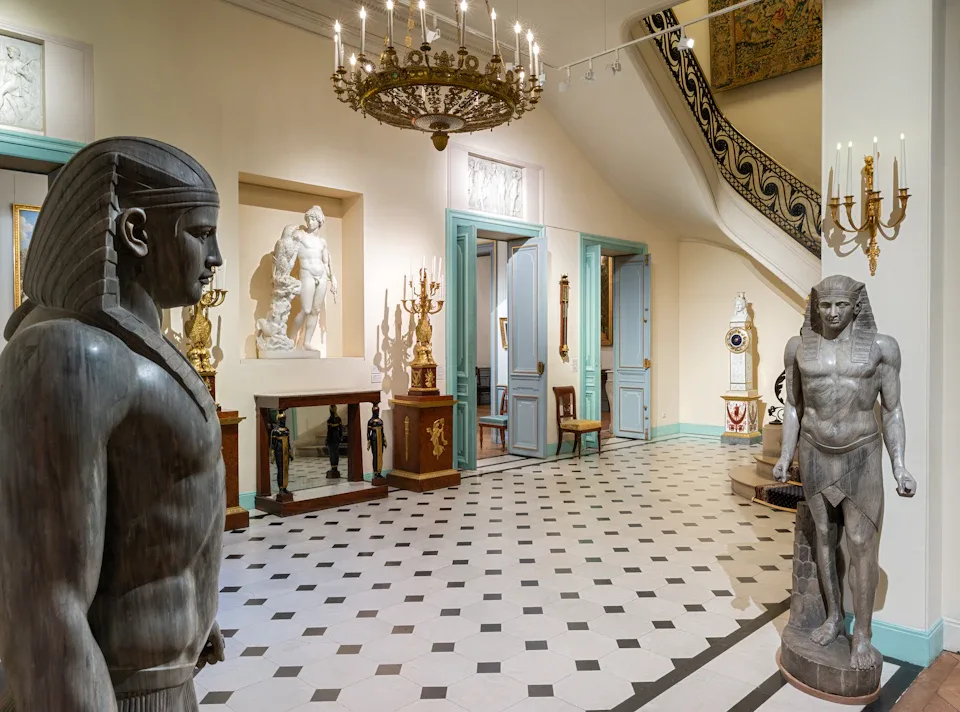
Originally a hunting lodge for the Duke of Valmy, the building was transformed into a grand private mansion by the Marmottan family in the late 19th century.
Initially designed to showcase a collection of Napoleonic-era art and furniture, the house was eventually bequeathed to the state to ensure its preservation as a museum.
This transition from a residential home to a public gallery is why the space feels uniquely personal and intimate compared to the city’s larger, more industrial institutions.
The museum's identity shifted dramatically in the mid-20th century through a massive donation from Claude Monet’s son. This gift established the world’s largest collection of the artist's work, including the legendary painting Impression, Sunrise, which provided the name for the entire Impressionist movement.
It remains the most important site for understanding Monet’s creative journey, from his early sketches to the large-scale water lilies of his later years.
Today, the Musee Marmottan Monet serves as a quiet alternative to the crowded halls of central Paris. Beyond the Monet masterpieces, it houses the most significant collection of works by Berthe Morisot, the leading female figure of the movement.
Visitors can explore these revolutionary artworks within the original wood-paneled rooms of the townhouse, offering a rare glimpse into the aristocratic world where these paintings were first collected and admired.
The Musée Marmottan Monet is fully accessible to wheelchair users and visitors with reduced mobility. A modern elevator serves all floors, including the lower-level gallery housing the permanent Claude Monet collection and the upper floors dedicated to the Morisot and illumination collections.
Manual wheelchairs are available at the reception desk for use within the museum free of charge, though they cannot be reserved in advance.
Entry is free for children under 7 years old. A reduced admission rate of 9 EUR is available for visitors under 18 and students under 25. Small, collapsible strollers are permitted throughout the galleries.
However, because the museum is housed in a historic private mansion with some narrow passages and delicate Empire-style furniture, bulky or double strollers must be left at the cloakroom. Using a baby carrier is the most efficient way to navigate the smaller rooms on the upper floors.
The museum maintains a quiet, contemplative atmosphere. While the basement gallery featuring the "Impression, Sunrise" painting is spacious and easy to navigate, the ground floor rooms are more constrained.
There are no dedicated play areas or interactive zones for children, so the environment is best suited for families with older children or infants in carriers. All visitors under the age of 15 must be accompanied by an adult.
To avoid the longest queues, plan to arrive during the late afternoon or during the Thursday evening late-night opening when the museum stays open until 21:00.
The Musée Marmottan Monet is housed in a former hunting lodge, which means the layout is more intimate than the larger state museums. To ensure a comfortable visit, take note of the following facilities available on-site:
* Restrooms and Cloakroom: Free restrooms are located on the lower level (-1), near the permanent Monet collection. A self-service cloakroom is available on the ground floor near the entrance. You are required to leave umbrellas, large bags, and bulky coats here, as they are not permitted in the galleries.
* Gift Shop: A specialized boutique is located on the ground floor near the exit. It offers an extensive collection of art books, high-quality prints of "Impression, Sunrise," and stationery inspired by the Impressionist and Empire-style works found in the museum.
* Wi-Fi: Free Wi-Fi is available for visitors throughout the building. The signal is strongest in the main hall and the lower-level galleries. * Food and Water: There is no cafe or restaurant inside the museum.
Because the 16th Arrondissement is a residential area, we recommend visiting the brasseries near the La Muette metro station for lunch or coffee. There are no public water fountains inside the galleries, and while you may carry a small bottle in your bag, drinking is strictly prohibited near the paintings.
For those traveling with young children, please note that the museum does not have dedicated nursing or prayer rooms. The historic nature of the townhouse also means that space is limited; if you are using a stroller, staff may ask you to use the elevator, which requires their assistance to operate.