Who will love it
90 minutes to 2 hours
Verdict€16

90 minutes to 2 hours
Weekday mornings
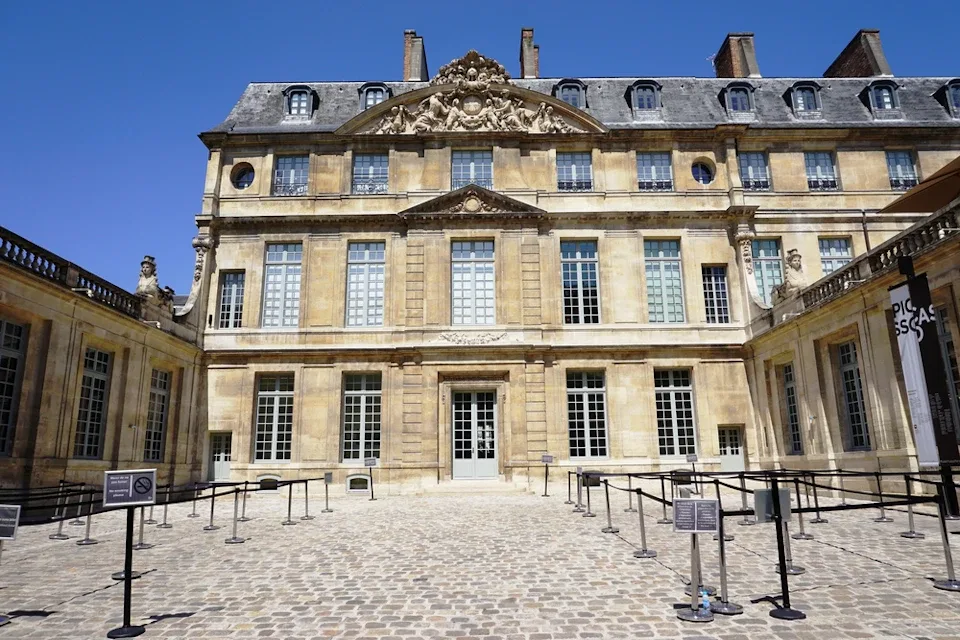
The Musée Picasso is defined by its setting within the Hôtel Salé, where the 17th-century architecture dictates a more intimate, sometimes congested, flow of movement than a modern gallery.
It is a specialist’s museum, focusing heavily on Picasso’s sculptures, personal archives, and the works he chose to keep for himself. Those seeking a "greatest hits" collection of his most famous massive canvases might find the thematic and rotating displays less satisfying than a traditional chronological gallery.
This experience is best suited for visitors who enjoy seeing the raw evolution of an artist’s style through sketches and varied media. If you prefer wide-open spaces and simple layouts, the dense arrangement of these historic rooms may feel overwhelming.
To find a moment of calm, head to the top floor where the exposed timber roof structure provides a striking architectural contrast to the modern art below.
Editor's Tip: The museum lacks a full-service restaurant, so use your location in the heart of the Marais to visit a local bistro on Rue des Coutures Saint-Gervais immediately after your exit.
For most visitors, the standard admission ticket is the only logical choice. It provides full access to both the permanent collection and any temporary exhibitions housed within the Hôtel Salé. Because the museum operates on a strict capacity limit, a basic ticket is essentially a timed-entry pass.
Paying for 'skip-the-line' upgrades through third-party platforms rarely offers a significant advantage over the official timed entry, as everyone must still pass through the same security checkpoint.
Tip: The most common mistake is arriving without a pre-booked time slot. The museum has moved toward a mandatory online reservation system, and walk-in availability is often non-existent during peak hours.
The Musée Picasso is housed in a 17th-century private mansion with narrow staircases and intimate rooms that feel crowded very quickly. To experience the art without the pressure of a crowd, aim for a weekday morning immediately at opening—typically 10:30 AM on weekdays or 9:30 AM on weekends.
Tuesday through Thursday are significantly quieter than the weekend rush.
For photographers and architecture lovers, the midday sun illuminates the grand central staircase beautifully, but this coincides with the highest foot traffic. If you prefer a solitary experience, the final 90 minutes before closing offer a peaceful atmosphere, though you may have to move quickly to see all four floors.
The museum is a staple inclusion in the Paris Museum Pass and the Go City Paris Pass. If you hold either, you still need to book a free timed-entry slot on the museum's official platform to guarantee entry. For those traveling on a budget, entry is free for everyone under the age of 18, and for EU residents under the age of 26 with a valid ID.
There are frequently bundled offers that pair a Musée Picasso ticket with a Seine River cruise departing from Pont Neuf or a walking tour of the Marais district. These are practical if you are already planning a boat trip, as they typically shave a few euros off the total price compared to buying separately.
A guided tour is highly recommended here because the collection is curated thematically rather than chronologically. Because the museum focuses on Picasso’s personal archives—works he chose never to sell—a guide is essential to explain the emotional and biographical context behind the sketches and sculptures.
Without a guide or a high-quality audio guide, the transition between his different creative periods can feel abrupt.
Important: If you are a seasoned modern art enthusiast, you may prefer a self-guided visit to linger over specific sketches. However, first-time visitors will find that a 90-minute tour helps navigate the labyrinthine layout of the Hôtel Salé and ensures you don't miss the hidden gems in the basement or the attic galleries.
Crowds are lightest during weekday mornings, while the narrow galleries feel significantly more congested in the afternoons.
Mini-calculator based on crowd levels by day and time.
This day is usually calmer than average. This slot has a higher chance of a comfortable visit: compromise between light and visitor flow.
The museum is located within the historic Hôtel Salé. Upon arrival at Rue de Thorigny, enter through the large stone gateway into the main courtyard. The entrance to the galleries is situated to the right of the courtyard.
Because the building is a 17th-century mansion rather than a purpose-built gallery, the lobby area is small and can feel crowded during peak morning hours.
Expect a mandatory security screening immediately upon entering the building. After security, you will proceed to the scanning stations. If you are carrying a backpack or a large umbrella, you must use the cloakroom or lockers before entering the exhibition rooms, as these items are strictly prohibited in the narrow gallery spaces.
The museum is housed in the Hôtel Salé, a 17th-century private mansion with narrow corridors and intimate rooms. While beautiful, these spaces can feel congested during peak hours, so expect close quarters with other visitors.
The historic nature of the building means elevators are small and prioritized for those with limited mobility; most visitors will use the grand staircase to navigate the four floors.
Plan for a 10 to 15-minute wait at the security screening located at the courtyard entrance. Because the collection rotates frequently to showcase different parts of Picasso's personal archives, certain famous works or specific artistic periods may be temporarily off-display.
Advance online booking for €16 is required to guarantee entry, as the museum strictly limits the number of people inside to preserve the historic structure.
To protect the artwork and maintain the flow of visitors in the tight gallery spaces, the following rules apply:
A free cloakroom is located in the lobby for coats, small bags, and umbrellas. However, the museum cannot accommodate large suitcases or travel luggage exceeding 55 x 35 x 20 cm due to national security regulations.
If you are traveling with larger bags, you must use a private luggage storage service in the Marais district before arriving at the museum gates.
Strollers are permitted within the galleries, but they must be compact. During busy periods, staff may ask you to leave bulky strollers in the cloakroom area. The museum provides a limited number of loaner strollers and wheelchairs at the reception desk on a first-come, first-served basis for those who need them.
Start the morning with a coffee at the Marché des Enfants Rouges before heading to the Musée Picasso to beat the midday crowds. Afterward, walk south through the narrow streets of the Marais to Place des Vosges for a quiet moment on the grass.
End your afternoon exploring the boutiques on Rue des Francs-Bourgeois and enjoy a classic Provencal dinner at Chez Janou.
The museum is housed within the Hôtel Salé, a grand 17th-century private mansion in the Marais district. Originally built for a wealthy financier, its opulent Baroque architecture and famous grand staircase create a striking contrast with the modern, often radical art on display.
This setting transforms a standard gallery visit into an exploration of both Parisian architectural history and avant-garde innovation.
The collection is unique because it consists largely of works that Pablo Picasso kept for himself throughout his life. These pieces were later donated to the French state by his heirs to settle inheritance taxes, creating a biography in art that spans his entire career.
Visitors see not just the famous paintings, but the private archives, experimental sculptures, and sketches that the artist chose never to sell.
This focus on personal archives makes the museum the most comprehensive resource for understanding Picasso’s creative evolution.
Rather than a static display of hits, the galleries rotate frequently to showcase different themes and periods, ensuring that the experience remains a deep, intimate look into the mind of the 20th century’s most influential artist.
Fully accessible with elevators to all floors.
Yes, free entry for minors and stroller-accessible galleries.
The Musée Picasso is fully accessible to visitors with reduced mobility. A ramped entrance provides access to the building, and wide elevators serve all exhibition levels. Manual wheelchairs are available for loan at the reception desk in exchange for a valid identity document.
Families with strollers are welcome throughout the museum. While personal strollers are permitted, the museum provides compact strollers for loan at the cloakroom to help visitors navigate the more intimate gallery spaces of the historic Hôtel Salé mansion.
Admission is free for all visitors under 18 years old. Additionally, residents of the European Union under 26 receive free entry. Children under 16 must be accompanied by an adult at all times during their visit.
The museum is located in the Marais district, where the surrounding streets are paved with historic cobblestones that may be uneven. Inside, the galleries are climate-controlled, though some rooms can become crowded during peak afternoon hours.
Clean restrooms are located on the basement level (-1) and are free for all visitors. This level also includes baby-changing facilities. A mandatory cloakroom is available near the entrance for storing coats and small bags, though large suitcases are not permitted.
For refreshments, the Café sur le Toit is located on the upper floor, offering a seasonal terrace with views of the Marais. The atmosphere is casual yet refined, serving light snacks, coffee, and cold drinks. While there are no dedicated water fountains, bottled water can be purchased at the cafe.
The museum shop on the ground floor features a wide selection of art books, posters, and Picasso-themed gifts. Free Wi-Fi is available throughout the galleries, though the historic stone walls can occasionally interfere with the signal in certain rooms.