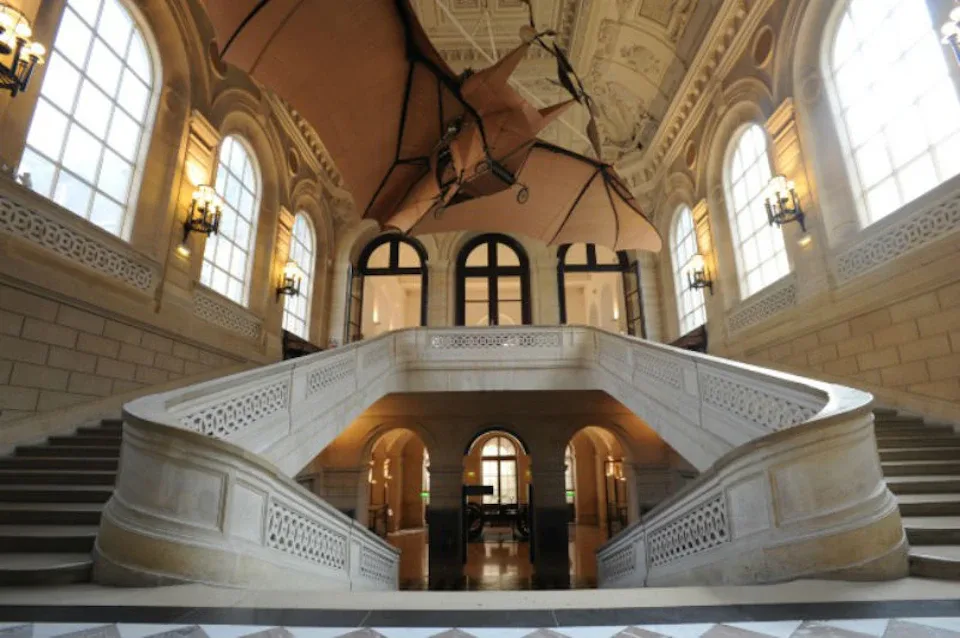
Musee Des Arts Et Metiers

Why visit

Who will love it

[ { "Price from": "12 EUR", "Duration": "2 to 3 hours", "Best time": "Weekday mornings for a quiet experience", "Booking required": "Yes", "District": "3rd Arrondissement", "Recommendation": "Prioritize this museum if you value the physical history of human ingenuity over digital displays.

It is a sanctuary for those who appreciate rare scientific instruments, early aviation prototypes, and the atmospheric power of seeing Foucault’s original pendulum swinging within a deconsecrated Gothic chapel.\n\nSkip this if you are traveling with young children who require interactive exhibits or if you prefer the high-tech, hands-on approach of modern science centers.

The layout is dense and academic, rewarding patient observation rather than quick, sensory engagement.\n\nPro Tip: Arrive via the Arts et Métiers Metro station on Line 11 to experience the copper-clad, steampunk-inspired platform that mirrors the museum's aesthetic." } ]

Who should skip it

Not specified yet

What to know beforehand

[ { "summary": "Housed in the former priory of Saint-Martin-des-Champs, the Musée des Arts et Métiers serves as Europe’s oldest repository of industrial design and scientific instruments. It suits travelers who prefer quiet, object-focused history over the interactive screens of modern science centers.

You will find Foucault’s original pendulum and early aviation prototypes in a stunning Gothic chapel.

The trade-off is a dense, traditional layout that requires patience to navigate, but it offers an unparalleled look at the physical evolution of human ingenuity.", "experience_notes": [ { "editorial_note": "The Musée des Arts et Métiers is a sanctuary for those who value the tangible weight of history—polished brass, heavy gears, and original wooden prototypes.

It functions more like an academic archive than a modern science center, making it a paradise for technical enthusiasts but potentially dry for visitors accustomed to high-tech interactivity.\n\nThe dense, multi-floor layout can be overwhelming, so focus your energy on the Saint-Martin-des-Champs chapel.

Seeing early aviation prototypes suspended beneath Gothic arches is the museum's undisputed atmospheric peak.

To set the mood, arrive via the Arts et Métiers Metro station on Line 11; its copper-clad walls and portholes make it one of the most cinematic transit stops in Paris.", "callout_label": "The Arrival", "callout_text": "The Line 11 Metro platform is a copper-clad steampunk masterpiece that serves as the perfect immersive prologue to the museum." } ], "tldr_block": { "the_essence": "Europe’s oldest industrial design museum featuring Foucault’s pendulum and aviation prototypes inside a stunning converted Gothic chapel.", "best_for": "Travelers seeking quiet, object-focused history and scientific instruments rather than interactive screens or modern science centers.", "logistics": "Advance booking is recommended; the museum is located in the 3rd Arrondissement near the Arts et Métiers Metro station.", "price": "Standard adult entry is 12 EUR, covering the permanent collection and the historic Saint-Martin-des-Champs priory buildings.", "timing": "Allocate 2 to 3 hours to navigate the dense, traditional layout and explore the seven thematic industrial collections.", "the_trade_off": "The museum uses a traditional, non-interactive display style that requires more patience than contemporary science centers." }, "ticket_advice": "### Which Ticket to Choose\n\nFor most visitors, the standard entry ticket at 12 EUR is the only one you need.

It provides full access to the permanent collection across three floors and, crucially, the Saint-Martin-des-Champs chapel where Foucault’s pendulum is housed.

If there is a major temporary exhibition running, you can opt for a combined ticket, but the permanent collection is vast enough to fill a half-day on its own.\n\n- Standard Ticket: Best for 90% of visitors; covers all scientific instruments and the historic chapel.\n- Temporary Exhibition Add-on: Only worth it if you have a specific interest in the rotating theme (e.g., photography or specific industrial eras).\n\nImportant: A common mistake is assuming the chapel requires a separate booking or higher-tier ticket.

It is part of the main museum circuit, so avoid third-party resellers offering 'chapel-only' access.\n\n### Best Time to Visit\n\nThe museum is rarely as overwhelmed as the Louvre, but school groups frequently fill the galleries on weekday mornings.

To have the early aviation hall and the pendulum to yourself, aim for the late-night opening on Fridays, when the museum stays open until 9:00 PM.

The atmosphere in the Gothic chapel after sunset is particularly striking and offers the best lighting for photography without the glare of midday sun through the stained glass.\n\nFor solo travelers and photographers, the two hours before closing on a Tuesday or Wednesday are exceptionally quiet.

Families should note that while weekends are busier, the museum’s layout is spacious enough that it never feels claustrophobic.\n\n### Combos and Discounts\n\nThe Musée des Arts et Métiers is a staple inclusion in the Paris Museum Pass.

If you are planning to visit the nearby Centre Pompidou or the Picasso Museum within a 48-hour window, the pass pays for itself.

Additionally, the museum offers free entry to everyone on the first Sunday of every month, though you should expect significantly higher crowd levels during these slots.\n\nYoung travelers under 18 enter for free regardless of nationality, and residents of the European Economic Area under 26 also enjoy free admission.

There are no specific 'skip-the-line' tickets sold separately because the queues at the 60 Rue Réaumur entrance are typically manageable, rarely exceeding 15 minutes even on weekends.\n\n### When to Take a Tour\n\nA guided tour is highly recommended if you are not a dedicated historian of science.

The museum’s layout is dense and the signage is often technical; a guide helps bridge the gap between 'old machine' and 'world-changing invention.' They can explain the specific mechanics of the Cugnot steam wagon or the nuances of the early Blériot aircraft hanging in the chapel.\n\nIf you prefer to move at your own pace, skip the human guide and use the digital audioguide available at the reception.

It provides enough context for the primary masterpieces without the constraint of a group schedule.

If you are visiting primarily for the architecture of the priory and the visual impact of the chapel, a self-guided walk is perfectly sufficient.\n\nTip: If you are visiting with children, look for the specific 'low-height' display cases and interactive models in the construction and materials sections; these are designed for self-exploration and do not require a guide to enjoy." } ]

🎫 Tickets, tours & discounts

[ { "### Which ticket to choose": "For most visitors, the standard entry ticket at 12 EUR is the only one you need. It provides full access to the seven thematic domains of the permanent collection and the deconsecrated Saint-Martin-des-Champs priory.

If a temporary exhibition is running, a combined ticket is available, but the permanent artifacts are so dense that a first-time visitor rarely needs the extra content.

\n\n- Standard Ticket: Best for general history and science enthusiasts; covers the Foucault pendulum and aviation hall.\n- Combined Ticket: Worth it only if the specific temporary theme aligns with your interests.\n\nTip: The most common mistake is arriving without a pre-booked time slot.

Even though it is a quieter museum than the Louvre, advance booking is mandatory to ensure entry, as capacity in the historic chapel is strictly monitored.", "### Best time to visit": "To avoid the energetic crowds of school groups, aim for a weekday morning right at 10:00 AM or a lunchtime slot when the galleries empty out.

Thursday is the most strategic day to visit because the museum extends its hours until 9:00 PM.

The evening atmosphere in the Gothic chapel, with the pendulum swinging in the shadows, offers a much more atmospheric experience than the bright morning hours.\n\nSolo travelers and photographers should prioritize the late-night Thursday window for the best lighting and fewer obstructions.

Families may prefer weekend mornings when the museum is lively but not as overwhelmed as the city's more famous art galleries.", "### Combos and discounts": "The Musée des Arts et Métiers is included in the Paris Museum Pass, making it a cost-effective stop if you are also visiting the nearby Centre Pompidou or the Picasso Museum.

If you are not using a pass, you can save significantly by timing your visit for the first Sunday of the month, when entry is free for everyone. \n\nYoung travelers have a major advantage here: entry is free for anyone under 18, and for European Union residents under 26.

Additionally, the museum offers free admission to all visitors on Thursday evenings starting at 6:00 PM.

If you are staying in the 3rd Arrondissement, this is the most efficient way to see the highlights without a financial commitment.", "### When to consider a tour": "A guided tour is highly recommended if you are a fan of technical history, as the museum uses a traditional display style with labels that can sometimes be overly academic.

A guide helps bridge the gap between the silent machines and their revolutionary impact on society. If you prefer a self-paced visit, skip the human guide and opt for the audio guide instead; it provides the necessary context for the complex scientific instruments without the constraints of a group schedule.

For casual visitors who just want to see the 'Blériot XI' airplane and the pendulum, a self-guided walk is perfectly sufficient." } ]

Weather now
Paris, France
NowClear ☀️
Temperature23°C
VisibilityExcellent
AerosolsClean air · AOD 0.11

Good conditions for visiting today.

AOD — how much dust and haze in the air dim the distant view. 0 clean, >0.4 noticeable, >0.7 heavy.

Crowd indicator

The Musée des Arts et Métiers is generally a quiet, contemplative space, though Thursday evenings and weekends see a moderate increase in visitors.

When to go?

Mini-calculator based on crowd levels by day and time.

Best time at Mon — 17:00

This day is usually calmer than average. This slot has a higher chance of a comfortable visit: Pre-evening transition.

30–50% · Quiet60–80% · Moderate90–100% · Crowded

Nearest days

TodayA typical Tuesday offers a quiet environment, perfect for a contemplative visit.
10:0025%
12:0015%
14:0050%
16:0040%
17:0035%
18:0030%
TomorrowWednesday brings more energetic school groups, so aim for a lunchtime visit to avoid the noise.
10:0030%
12:0020%
14:0065%
16:0050%
17:0040%
18:0030%
Day after tomorrowThursday is the most strategic day with late hours and free evening entry starting at 6:00 PM.
10:0025%
12:0015%
14:0055%
16:0060%
17:0075%
18:0090%

How to find the entrance

1
"Metro Arts et MétiersExit the station and walk toward the intersection of Rue Réaumur and Rue de Turbigo.",
2
"Main EntranceLocate the museum gate at 60 Rue Réaumur, marked by the historic priory facade.",
3
"Security and TicketsPass through the security screening and proceed to the ticket desk in the main hall.",
4
"Permanent CollectionsFollow signs to the main galleries or the Saint-Martin-des-Champs chapel for the pendulum."

{ "address": "60 Rue Réaumur, 75003 Paris", "metro": "Arts et Métiers (Lines 3 and 11)", "district": "3rd Arrondissement", "entrance_instructions": "## Reaching the Entrance\n\nThe main entrance is located at 60 Rue Réaumur.

If you arrive via the Arts et Métiers Metro station, the Line 11 platform is famously decorated like a copper-clad submarine; exit the station and look for the imposing stone walls of the former Saint-Martin-des-Champs priory.

The entrance is accessed through a large courtyard that leads to the modern reception area.\n\nOnce inside, you will undergo a mandatory security screening and ticket validation.

The museum is a complex of historic buildings, so the path from the ticket desk to the main galleries involves navigating several levels and wings.

Allow extra time to find your bearings as you move from the contemporary lobby into the medieval and industrial halls.\n\nExpect potential delays at these points:\n- Security bag checks at the main courtyard entrance.\n- Navigating the transition between the modern ticketing area and the historic chapel.\n- Locating the elevators, which are integrated into the older architecture and may require a short walk from the main stairs.\n\nImportant: You must book your entry time slot in advance.

The museum requires a pre-purchased ticket for a specific time to manage visitor numbers within the historic priory rooms." }

Practical limits & what to bring

{ "editorial": "### What to consider before your visit\nThe museum is housed in a historic priory, which creates a unique but complex layout. While elevators serve all floors, navigating between the industrial galleries and the Saint-Martin-des-Champs chapel requires following a specific path that can feel long.

This is a quiet, scholarly environment with few interactive displays, so it is best suited for those who enjoy observing intricate physical objects and historical prototypes in a tranquil setting.\n\nExpect a standard security screening at the entrance.

The museum is generally well-ventilated, but the upper galleries and the chapel can become warm during high-temperature days.

Most of the signage is bilingual in French and English, but the sheer volume of technical information means you should prepare for a dense reading experience.\n\n### Prohibited and permitted items\n- No suitcases or large bags (maximum size allowed is 55x35x20 cm).\n- No food or open drink containers in the exhibition areas.\n- No tripods, selfie sticks, or professional filming equipment.\n- No umbrellas (must be placed in the cloakroom).\n- Small backpacks and handbags are permitted.\n- Personal photography without flash is allowed.\n- Sealed water bottles may be carried in a bag but not consumed in the galleries.\n\n### Storage and belongings\nFree self-service lockers are located on the ground floor near the cloakroom area.

These lockers require a 1 EUR coin to lock, which is returned to you when you collect your items. Due to national security regulations, the museum cannot accept any luggage that exceeds standard cabin-bag dimensions.

Strollers are permitted throughout the museum, and the elevators make all levels accessible, though a compact stroller is easier to maneuver through the dense displays of the scientific instrument section.\n\nTip: Head to the Saint-Martin-des-Champs chapel last; it is the atmospheric highlight where Foucault’s pendulum and early aircraft are suspended in a Gothic setting." }

Location and what's nearby

{ "location_context": "### What kind of neighborhood\n- This area sits in the Upper Marais, a sophisticated district known for its blend of historic architecture and contemporary design galleries.\n- It is a quiet, intellectual neighborhood where local artisans and tech startups coexist in former 19th-century industrial spaces.\n- The district fits a day of cultural discovery, offering a more authentic and less crowded experience than the central tourist hubs.\n\n### Nearby on foot (up to 15 minutes)\n- Gaîté Lyrique — Digital arts and music center housed in a magnificent former theater · 3 min\n- Square du Temple — Elegant landscaped park on the site of a medieval Knights Templar fortress · 6 min\n- Place de la République — Massive pedestrian square and a major landmark for local gatherings · 8 min\n- Marché des Enfants Rouges — The oldest covered food market in Paris with vibrant international stalls · 11 min\n- Musée Picasso Paris — World-class collection of the artist's work in a grand 17th-century mansion · 13 min\n- Passage Brady — Atmospheric covered arcade famous for its authentic Indian and Pakistani restaurants · 10 min\n\n### 15–30 minutes by transport\n- Centre Pompidou — High-tech architectural icon housing the National Museum of Modern Art · 15 min by metro\n- Palais Garnier — Lavish 19th-century opera house featuring a famous ceiling by Marc Chagall · 20 min by metro\n- Père Lachaise Cemetery — Historic burial ground of Oscar Wilde, Jim Morrison, and Edith Piaf · 22 min by metro\n- Canal Saint-Martin — Trendy waterway lined with iron bridges and popular riverside cafes · 18 min by bus\n\n### Where to eat nearby\n- Song Heng — Legendary small spot for authentic Pho and Bo Bun · budget · can visit without booking · 3 min walk\n- Derrière — Creative French cuisine served in a quirky apartment-style setting · middle · booking recommended · 5 min walk\n- Benoit — Classic Michelin-starred bistro serving traditional French fare since 1912 · above average · booking essential · 14 min walk\n- Les Enfants Rouges — Diverse market stalls offering everything from Moroccan to Japanese dishes · budget · can visit without booking · 11 min walk\n\n### Ready-made itinerary\nStart your morning at Place de la République to feel the city's energy before walking to the Musée des Arts et Métiers to explore its scientific treasures.

For lunch, head to the bustling Marché des Enfants Rouges to enjoy a casual meal at one of the international food stalls.

Spend your afternoon wandering through the quiet streets of the Upper Marais to reach the Musée Picasso, then finish your day with a creative dinner at the eclectic Derrière.\n\nNote: Visit the museum early in the day to experience the Foucault pendulum in the quiet atmosphere of the Gothic chapel before the neighborhood becomes busier." }

Reference

Facts

Read more

[ "### Numbers and Scale", "- Founded: 1794, establishing it as the oldest museum of industrial design and scientific instrumentation in Europe.", "- Collection size: 80,000 distinct objects and 15,000 technical drawings, representing over two centuries of human innovation.", "- Display ratio: Only 2,500 items are on public view, meaning 97% of the total collection remains in specialized storage.", "- Thematic divisions: 7 specialized galleries organize the history of technology from materials and energy to mechanics and communication.", "- Statue of Liberty: The museum grounds hold the 1878 bronze \"Model Number 1,\" which served as the template for the New York monument.", "### Myths and Misconceptions", "- Myth: The pendulum swinging in the chapel is a modern reproduction.

In fact: It is the original 1851 lead-filled brass sphere used by Léon Foucault at the Panthéon.", "- Myth: The museum is an interactive science center designed primarily for children.

In fact: It is a traditional repository of historical artifacts requiring a slow, observational approach.", "- Myth: The building was purpose-built as a museum in the 18th century.

In fact: It occupies a medieval Benedictine priory that once served as a prison and an arms factory.", "### Rare and Unusual", "- The Metro station Arts et Métiers on Line 11 is a copper-plated masterpiece designed to mimic the interior of the Nautilus from Jules Verne’s novels.", "- The collection features the 1769 Cugnot Steam Wagon, recognized as the world's first self-propelled mechanical vehicle, predating modern cars by over a century.", "- Suspended in the chapel is the Avion III, a 19th-century steam-powered flying machine with bat-like wings that attempted flight before the Wright brothers.", "- Hidden among the exhibits is \"The Tympanum Player,\" a 1784 mechanical android built for Marie Antoinette that still functions today.", "- The Gothic chapel possesses unique acoustics where a whisper directed at certain corners can be heard clearly on the opposite side of the nave." ]

Background

History

Read more

{ "history": "The Musée des Arts et Métiers occupies the grounds of the former Saint-Martin-des-Champs priory, a site that transitioned from a medieval religious center to a sanctuary for human invention.

As Europe’s oldest repository of industrial design, it was established to house the instruments and machines that fueled the Industrial Revolution.

This unique heritage is most visible in the museum's chapel, where Gothic arches now frame pioneering aircraft and scientific apparatus.\n\n### A Legacy of Innovation\nUnlike modern science centers that rely on digital simulations, this museum preserves the physical artifacts of progress.

Visitors can stand beneath the original aviation prototypes of Clément Ader or watch the steady swing of Foucault’s pendulum, which proved the Earth's rotation in this very setting.

The collection serves as a tangible timeline of how humanity solved complex problems through mechanical engineering and craftsmanship.\n\nToday, the museum offers a rare, quiet atmosphere in the heart of the 3rd Arrondissement.

It remains a vital destination for those who want to see the actual objects—from early clocks to massive steam engines—that shaped the modern world. The dense, traditional displays emphasize the weight and scale of history, providing a direct connection to the inventors of the past." }

♿ Accessibility & families

[ { "accessibility_and_family": "## Accessibility and Mobility\n\nThe Musée des Arts et Métiers is fully accessible to visitors with reduced mobility. All exhibition levels, including the converted Saint-Martin-des-Champs church, are served by elevators and ramps.

Manual wheelchairs are available for loan at the main reception desk in exchange for an identity document. Most galleries feature benches and rest areas, making it manageable for those who cannot stand for long periods.\n\n## Family Policy and Strollers\n\nStrollers are permitted throughout the museum galleries.

The spacious layout and large elevators accommodate standard prams easily, though the historic stone flooring in the church section can be slightly uneven.

For families traveling light, baby carriers are recommended for the more crowded temporary exhibitions.\n\n## Entry and Age Requirements\n\nAccess to the permanent collections is free for all visitors under 18 years old. Additionally, residents of the European Economic Area under 26 enjoy free entry.

Children under 15 must be accompanied by an adult at all times. The museum is a high-engagement site for kids under 12, featuring a 'Family Discovery' area and specific activity circuits designed to explain complex inventions in simple terms.\n\n## Navigation Notes\n\nThe museum is located at 60 rue Réaumur.

While the Arts et Métiers Metro station (Lines 3 and 11) is a themed attraction in itself, it is not step-free. Travelers requiring level access should use bus lines 20, 38, 39, or 47, which stop nearby and offer low-floor boarding." } ]

🏢 On-site amenities

[ { "amenities": "## On-Site Facilities\n\nFree restrooms are located on the ground floor and the first floor of the museum. These facilities are accessible to visitors with reduced mobility and include baby-changing stations on the ground level.

A free cloakroom with self-service lockers is available near the entrance; you will need a 1 EUR coin or a trolley token to secure a locker, which is returned after use.\n\nFor dining, the Café des Techniques is located within the museum courtyard.

It is a casual eatery serving light lunches, snacks, and hot drinks, with an outdoor terrace available during warmer weather. You can find water fountains near the restroom areas, and carrying a personal water bottle is permitted inside the galleries.\n\nThe museum boutique is situated next to the ticket office.

It offers a specialized selection of scientific kits, technical models, stationery, and books focused on the history of inventions and industry. Free Wi-Fi is available in the main reception area and the cafe." } ]

Reliability & freshness

UpdatedJune 16, 2026

I live in Paris and, after seven years here, I write clear guides on transport, costs, neighbourhoods, and daily travel details.